
General
Preferred name
PURINE
Synonyms
¦Â-Purine ()
7H-Imidazo(4,5-d)pyrimidine ()
P&D ID
PD099057
CAS
120-73-0
Tags
available

Probe control
Probe control not defined

Orthogonal probes
0
No orthogonal probes found

Similar probes
0
No structurally similar probes found
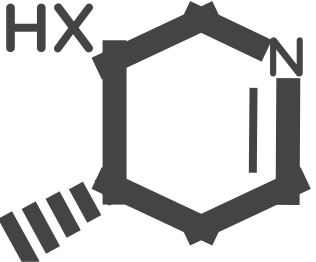 Structure

 P&D probe-likeness score

Structure formats
[[ format ]]
[[ compound[format === 'MOL' ? 'molblock' : format.toLowerCase()] ]]
Description
(extracted from source data)
DESCRIPTION
Purine is an endogenous metabolite. Purine bases are the building blocks of the nucleic acids. Purine inhibits the activation of PARP. Purine protects against oxidant-induced cell injury. Purine can be used in the research of cancer and nervous system diseases[1][2][3][4].
PRICE
29
DESCRIPTION
Purine (7H-Imidazo(4,5-d)pyrimidine) is a heterocyclic aromatic organic compound, consisting of a pyrimidine ring fused to an imidazole ring. Two of the bases in nucleic acids, adenine and guanine, are purines. Purines from food (or from tissue turnover) are metabolised by several enzymes, including xanthine oxidase, into uric acid. High levels of uric acid can predispose to gout when the acid crystalises in joints; this phenomenon only happens in humans and some animal species (e.g. dogs) that lack an intrinsic uricase enzyme that can further degrade uric acid.
(TargetMol Bioactive Compound Library)
[[ p.pathway_name ]]
[[ compound.targets[tid].gene_name ]]
Compound Sets
5
Cayman Chemical Bioactives
Enamine Bioactive Compounds
MedChem Express Bioactive Compound Library
Selleckchem Bioactive Compound Library
TargetMol Bioactive Compound Library
[[ a.name ]]
[[ ligand_id ]]
free of charge
External IDs
52

Molecular Weight
120.04
Hydrogen Bond Acceptors
3
Hydrogen Bond Donors
1
Rotatable Bonds
0
Ring Count
2
Aromatic Ring Count
2
cLogP
0.35
TPSA
54.46
Fraction CSP3
0.0
Chiral centers
0.0
Largest ring
6.0
QED
0.55

Structural alerts
0
No structural alerts detected

Related compounds
Custom attributes
(extracted from source data)
Target
Endogenous Metabolite
DNA/RNA Synthesis
PARP
Pathway
Cell Cycle/DNA Damage
Epigenetics
Metabolic Enzyme/Protease
Metabolism
Source data