
General
Preferred name
PIPRADROL
Synonyms
PIPRADROL HYDROCHLORIDE ()
Pipradrol (hydrochloride) ()
Luxidin ()
Pipradole hydrochloride ()
Pipral ()
Stimolag fortis ()
Pipradrol hcl ()
Leptidrol ()
Piperadrol hydrochloride ()
Meratrans ()
Meratonic ()
Meratran hydrochloride ()
Gerodil ()
Detaril ()
Meratran ()
Pipradol ()
Piridrol ()
Pipralon ()
Pyridrole ()
Gerodyl ()
MRD-108 ()
Pyridrol ()
Alpha-pipradol ()
P&D ID
PD073425
CAS
71-78-3
467-60-7
18717-93-6
Tags
available
drug
drug candidate
Drug Status
approved
investigational
Max Phase
2.0
Drug indication
Attention deficit hyperactivity disorder

Probe control
Probe control not defined

Orthogonal probes
0
No orthogonal probes found

Similar probes
0
No structurally similar probes found
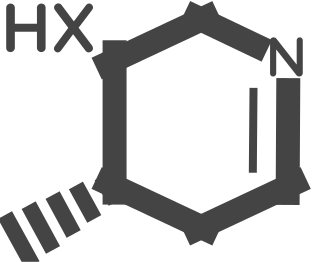 Structure

 P&D probe-likeness score

Structure formats
[[ format ]]
[[ compound[format === 'MOL' ? 'molblock' : format.toLowerCase()] ]]
Description
(extracted from source data)
PHARMACODYNAMICS
Pipradrol (Meratran) is a psychoactive agent and a central nervous system stimulant that has proven useful in the field of psychiatry [L2522].; ; Pipradrol was initially used as an adjunct in the dietary management of obesity as well as for the management of dementia symptoms. Numerous reports have been made on the properties of pipradrol, demonstrating its favorable effects in the treatment of depression and fatigue in addition to a variety of other conditions including narcolepsy, spasmodic torticollis, schizophrenia and in geriatric practice [L2522].
MOA
Pipradrol and pipradrol derivatives are norepinephrine and dopamine reuptake inhibitors [T178]. ; ; In a pharmacokinetic study, it was shown that pipradrol conditioned place preference (CPP) [L2526] was blocked by selective D1 dopamine antagonist, implicating that a rewarding effect of pipradrol may involve the activation of D1 dopamine receptors.; ; Pipradrol has a definite cerebral stimulating effect without affecting the blood pressure or respiration and has been used to counteract post-anaesthetic and chlorpromazine depression in man. Structurally related to phenylmethylamphetamine, a potent stimulant with a long half-life, pipradrol differs from amphetamine in that its action is more intense at higher centers, it does not exhibit pressor activity, there is no post-excitement depression, and this drug does not decrease appetite, as occurs with amphetamine [L2522].
TOXICITY
Toxicity Data: Oral LD50 (rat): 180 mg/kg; Oral LD50 (mouse): 120 mg/kg; Oral LD50 (rabbit): 180 mg/kg [MSDS].; ; The toxicity of this drug is dependent on the dose ingested, and is owed to its central nervous stimulant activity [T178], [T179].; ; Overdoses of pipradrol hydrochloride cause nausea, anxiety, insomnia and abdominal pain, however, these symptoms often disappear when the drug is withdrawn. In severe cases, convulsions may occur [L2515], [T179]. This drug is contraindicated in anxiety, psychosis states, and schizophrenia, as it can worsen these symptoms. Hallucinations have been reported after taking this drug [T178].; ; Over the last decade there has been greater use of novel psychoactive substances (âlegal highsâ) across Europe and the United States, including increasing frequency of reports of diphenylprolinol (D2PM) and desoxypipradrol (2-DPMP) use [L2519].; ; There are increasing reports that D2PM (desoxy analogue of pipradrol) and 2-DPMP (a pyrrolidine analogue of pipradrol) are used in Europe as drugs of abuse. 2-DPMP has sympathomimetic properties similar to cocaine and, in addition, prolonged and clinically significant neuropsychiatric symptoms have been reported [L2519]. The binding and activity of D2PM at the dopamine re-uptake transporter, is also similar to cocaine, though it appears that D2PM has less potent biological activity [L2519].
[[ p.pathway_name ]]
[[ compound.targets[tid].gene_name ]]

Compound Sets
7
Cayman Chemical Bioactives
ChEMBL Drugs
DrugBank
DrugBank Approved Drugs
DrugCentral
DrugCentral Approved Drugs
DrugMatrix
[[ a.name ]]
[[ ligand_id ]]
free of charge
External IDs
30

Molecular Weight
267.16
Hydrogen Bond Acceptors
2
Hydrogen Bond Donors
2
Rotatable Bonds
3
Ring Count
3
Aromatic Ring Count
2
cLogP
3.06
TPSA
32.26
Fraction CSP3
0.33
Chiral centers
1.0
Largest ring
6.0
QED
0.9

Structural alerts
0
No structural alerts detected

Related compounds
Custom attributes
(extracted from source data)
Source data