
General
Preferred name
menthyl salicylate
Synonyms
P&D ID
PD072691
CAS
89-46-3
Tags
available
drug
Approved by
FDA
Drug Status
approved

Probe control
Probe control not defined

Orthogonal probes
0
No orthogonal probes found

Similar probes
0
No structurally similar probes found
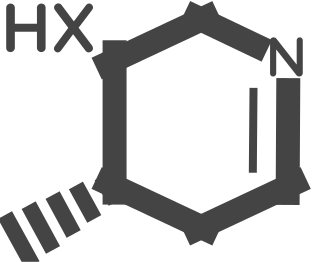 Structure

 P&D probe-likeness score

Structure formats
[[ format ]]
[[ compound[format === 'MOL' ? 'molblock' : format.toLowerCase()] ]]
Description
(extracted from source data)
MOA
Menthol dilates the blood vessels causing a sensation of coldness, followed by an analgesic effect. Menthol also acts as a penetration enhancer, increasing the penetration of drugs when applied on the skin, to give a faster onset of action [L2814].; ; Methyl salicylate is a salicylic acid derivative, and when combined with menthol, produces menthyl salicylate [L2814].; ; Salicylates inhibit cyclooxygenase, thereby reducing the formation of prostaglandins, and cause platelet dysfunction; Methyl salicylate is used topically as a counter-irritant. Upon application, it is absorbed through the skin and is applied for the relief of pain in rheumatic conditions and painful muscle or joints [L2814].; ; The menthol dilates blood vessels, why the salicylate portion provides a topical anesthetic and analgesic action on the affected area. The cooling and warning action may interfere with the transmission of pain signals through nerves [L2814].
INDICATION
; For the temporary relief of pain associated with rheumatism, arthritis, neuralgia, sprains and strains of joints and muscles, lumbago and fibrositis [F91].
TOXICITY
Salicylate intoxication may occur after ingestion or topical application of menthyl salicylate.; Mild chronic salicylate intoxication, also known as _salicylism_, normally occurs only after repeated use of large doses. ; ; Salicylism can also occur following the excessive topical application of salicylates. Symptoms of toxicity include dizziness, tinnitus, deafness, sweating, nausea and vomiting, headache, and confusion, and may be controlled by reducing the dosage [F91].; ; Symptoms of more severe intoxication or of acute poisoning following overdose include hyperventilation, fever, restlessness, ketosis, and respiratory alkalosis and metabolic acidosis. Depression of the CNS may lead to coma, cardiovascular collapse and respiratory failure may also result [F91].
[[ p.pathway_name ]]
[[ compound.targets[tid].gene_name ]]

Compound Sets
4
[[ a.name ]]
[[ ligand_id ]]
free of charge
External IDs
17

Molecular Weight
276.17
Hydrogen Bond Acceptors
3
Hydrogen Bond Donors
1
Rotatable Bonds
3
Ring Count
2
Aromatic Ring Count
1
cLogP
4.01
TPSA
46.53
Fraction CSP3
0.59
Chiral centers
3.0
Largest ring
6.0
QED
0.85

Structural alerts
0
No structural alerts detected

Related compounds
Custom attributes
(extracted from source data)
Source data