
General
Preferred name
PINOCEMBRIN
Synonyms
5,7-Dihydroxyflavanone ()
Dihydrochrysin ()
Galangin flavanone ()
Dihydrochrysin, Galangin flavanone, 5,7-Dihydroxyflavanone ()
(+)-Pinocoembrin ()
NSC-43318 ()
(2S)-Pinocembrin ()
NSC-279005 ()
P&D ID
PD062251
CAS
50735-55-2
480-39-7
Tags
available
drug candidate
Drug Status
investigational
Max Phase
2.0
Drug indication
Ischemic stroke

Probe control
Probe control not defined

Orthogonal probes
0
No orthogonal probes found

Similar probes
0
No structurally similar probes found
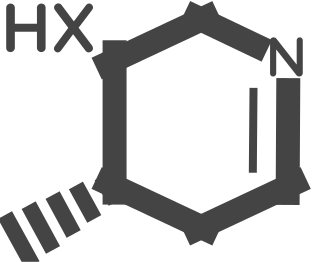 Structure

 P&D probe-likeness score

Structure formats
[[ format ]]
[[ compound[format === 'MOL' ? 'molblock' : format.toLowerCase()] ]]
Description
(extracted from source data)
DESCRIPTION
Pinocembrin ((+)-Pinocoembrin) is a flavonoid found in propolis, acts as a competitive inhibitor of histidine decarboxylase, and is an effective anti-allergic agent, with antioxidant, antimicrobial and anti-inflammatory properties[1].
PRICE
33
DESCRIPTION
Pinocembrin (5,7-Dihydroxyflavanone) is a flavanone, a type of flavonoid. It is an antioxidant found in damiana, honey, fingerroot, and propolis.
(TargetMol Bioactive Compound Library)
[[ p.pathway_name ]]
[[ compound.targets[tid].gene_name ]]
Cell lines
4

Organisms
2
Compound Sets
8
Cayman Chemical Bioactives
ChEMBL Drugs
Drug Repurposing Hub
DrugMAP
MedChem Express Bioactive Compound Library
ReFrame library
Selleckchem Bioactive Compound Library
TargetMol Bioactive Compound Library
[[ a.name ]]
[[ ligand_id ]]
free of charge
External IDs
48

Molecular Weight
256.07
Hydrogen Bond Acceptors
4
Hydrogen Bond Donors
2
Rotatable Bonds
1
Ring Count
3
Aromatic Ring Count
2
cLogP
2.8
TPSA
66.76
Fraction CSP3
0.13
Chiral centers
1.0
Largest ring
6.0
QED
0.82

Structural alerts
0
No structural alerts detected

Related compounds
Custom attributes
(extracted from source data)
Pathway
NF-¦ÊB
Immunology/Inflammation
Metabolism
Microbiology/virology
NF-κB
Anti-infection
Metabolic Enzyme/Protease
Target
Autophagy
Bacterial
Reactive Oxygen Species (ROS)
CYP1B1
ADC Cytotoxin,Anti-infection
Reactive Oxygen Species
MOA
Cytochrome P450 inhibitor
Source data