
General
Preferred name
LINALOOL
Synonyms
Linalol ()
(±)-Linalool ()
Phantol ()
(¡À)-Linalool ()
Phantol(¡À)-Linalool ()
(-)-Linalool ()
Linalool,98% (stabilized with MEHQ) ()
(±)-Linalool-d3 ()
P&D ID
PD048658
CAS
126-90-9
11024-20-7
126-91-0
78-70-6
22564-99-4
1216673-02-7
Tags
available
drug candidate
natural product
Drug indication
Discovery agent

Probe control
Probe control not defined

Orthogonal probes
0
No orthogonal probes found

Similar probes
0
No structurally similar probes found
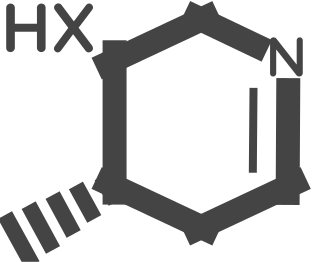 Structure

 P&D probe-likeness score

Structure formats
[[ format ]]
[[ compound[format === 'MOL' ? 'molblock' : format.toLowerCase()] ]]
Description
(extracted from source data)
DESCRIPTION
Linalool is a phytochemical. It enhances the agonist activity of the cannabinoid agonist at CB receptors .
(GtoPdb)
DESCRIPTION
Linalool is a natural monoterpene which is a competitive NMDA receptor antagonist. Linalool is orally active and crosses the blood-brain barrier. Linalool has anticancer, antibacterial, anti-inflammatory, neuroprotective, anxiolytic, antidepressant, anti-stress, cardioprotective, hepatoprotective, nephroprotective and pulmonary protective activities[1][2][3][4][5].
PRICE
29
DESCRIPTION
1. Linalool (Linalol), a natural compound of the essential oils, has been shown to have antinociceptive, antimicrobial, and anti-inflammatory properties. 2. Linalool was protected against LPS/GalN-induced liver injury through induction of antioxidant defense via Nrf2 activating and reduction inflammatory response via NF-??B inhibition. 3. Linalool biosynthesis and accumulation might be involved in plant defense against bacterial and fungal pathogens and be associated with field resistance to citrus canker. 4. Linalool significantly increased the expression of antioxidant enzymes regulated by Nrf-2 and diminished lung tissue levels of several pro-inflammatory cytokines, including tumor necrosis factor ?? (TNF-??) and interleukin (IL)-6.
DESCRIPTION
1. Linalool (Linalol), a natural compound of the essential oils, has been shown to have antinociceptive, antimicrobial, and anti-inflammatory properties. 2. Linalool was protected against LPS/GalN-induced liver injury through induction of antioxidant defense via Nrf2 activating and reduction inflammatory response via NF-κB inhibition. 3. Linalool biosynthesis and accumulation might be involved in plant defense against bacterial and fungal pathogens and be associated with field resistance to citrus canker. 4. Linalool significantly increased the expression of antioxidant enzymes regulated by Nrf-2 and diminished lung tissue levels of several pro-inflammatory cytokines, including tumor necrosis factor α (TNF-α) and interleukin (IL)-6.
(TargetMol Bioactive Compound Library)
[[ p.pathway_name ]]
[[ compound.targets[tid].gene_name ]]

Cell lines
1

Organisms
0
Compound Sets
8
[[ a.name ]]
[[ ligand_id ]]
free of charge
External IDs
41

Molecular Weight
154.14
Hydrogen Bond Acceptors
1
Hydrogen Bond Donors
1
Rotatable Bonds
4
Ring Count
0
Aromatic Ring Count
0
cLogP
2.67
TPSA
20.23
Fraction CSP3
0.6
Chiral centers
1.0
Largest ring
0.0
QED
0.62

Structural alerts
0
No structural alerts detected

Related compounds
Custom attributes
(extracted from source data)
Pathway
Apoptosis
Immunology/Inflammation
Membrane Transporter/Ion Channel
Metabolism
Neuroscience
NF-¦ªb
Anti-infection
Metabolic Enzyme/Protease
Neuronal Signaling
MOA
TNF inhibitor
Target
TNF-¦Á
Bacterial
Endogenous Metabolite
iGluR
TNF Receptor
NMDAR
IL-6
TNF-α
Source data