
General
Preferred name
CINCHONINE
Synonyms
(8R,9S)-Cinchonine ()
LA40221 ()
LA40221(8R,9S)-Cinchonine ()
CINCHONINE SULFATE ()
NSC-6176 ()
D-cinchonine ()
Cinchonan-9-ol, (9s)- ()
(9s)-cinchonan-9-ol ()
Cinchonine, sulfate (2:1) (salt) ()
Cinchoninum sulphuricum ()
Cinchonine, sulphate (2:1) (salt) ()
Anhydrous cinchonine sulfate ()
Cinchonine sulfate anhydrous ()
GNF-Pf-3189 ()
TCMDC-123933 ()
Cinchonine sulphate ()
Cinchonine sulfate, anhydrous ()
P&D ID
PD046021
CAS
118-10-5
Tags
available
drug candidate
natural product

Probe control
Probe control not defined

Orthogonal probes
0
No orthogonal probes found

Similar probes
0
No structurally similar probes found
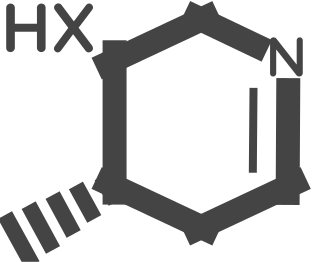 Structure

 P&D probe-likeness score

Structure formats
[[ format ]]
[[ compound[format === 'MOL' ? 'molblock' : format.toLowerCase()] ]]
Description
(extracted from source data)
DESCRIPTION
Cinchonine is an alkaloid phytochemical which is present in the South American shrub/tree Cinchona officinalis, one of the plants that is used for the production of . It is structurally very similar quinine. Experimental evidence indicates that cinchonine can act as a GLP-1 receptor agonist, with associated findings in mouse models that support its potential as an oral agent to treat type 2 diabetes and non-alcoholic steatohepatitis (NASH) . Molecular docking was used to analyse the likely binding characteristics of cinchonine for the GLP-1 receptor, and to predict the contact residues that mediate ligand docking into the receptor structure. Binding affinity was considered to be good by this methodology, but this should be confirmed by further in vitro exploration.
(GtoPdb)
DESCRIPTION
Cinchonine is a natural compound present in Cinchona bark with antimalarial, antitumor, anti-inflammatory, anti platelet-aggregation and anti-obesity properties. Cinchonine inhibits cells proliferation and autophagy and induces apoptosis through activation of Caspase-3. Cinchonine activates endoplasmic reticulum stress-induced apoptosis in human liver cancer cells[1].
PRICE
29
DESCRIPTION
Cinchonine (LA40221), a local anesthetic of the amide type, now generally used for surface anesthesia. It is one of the most potent and toxic of the long-acting local narcotics and its parenteral use is restricted to spinal anesthesia.
(TargetMol Bioactive Compound Library)
[[ p.pathway_name ]]
[[ compound.targets[tid].gene_name ]]

Cell lines
0

Organisms
1

Compound Sets
5
ChEMBL Drugs
Drug Repurposing Hub
Guide to Pharmacology
MedChem Express Bioactive Compound Library
TargetMol Bioactive Compound Library
[[ a.name ]]
[[ ligand_id ]]
free of charge
External IDs
37

Molecular Weight
294.17
Hydrogen Bond Acceptors
3
Hydrogen Bond Donors
1
Rotatable Bonds
3
Ring Count
5
Aromatic Ring Count
2
cLogP
3.16
TPSA
36.36
Fraction CSP3
0.42
Chiral centers
5.0
Largest ring
6.0
QED
0.88

Structural alerts
0
No structural alerts detected

Related compounds
Custom attributes
(extracted from source data)
Target
Apoptosis
P-gp (P-glycoprotein)
Parasite
CYP2D6
Autophagy
Calcium Channel
Caspase
MOA
P-gp
P glycoprotein inhibitor
Pathway
Membrane Transporter/Ion Channel
Microbiology/virology
Neuroscience
Anti-infection
Neuronal Signaling
Source data