
General
Preferred name
QUERCITRIN
Synonyms
Sophoretin ()
3-rhamnosyl quercetin ()
Quercetin 3-rhamnoside ()
Xanthaurine ()
Meletin ()
3-rhamnosyl quercetin, Sophoretin, Meletin, Xanthaurine ()
P&D ID
PD043877
CAS
522-12-3
Tags
available
drug candidate
nuisance
Drug indication
Discovery agent

Probe control
Probe control not defined

Orthogonal probes
0
No orthogonal probes found

Similar probes
0
No structurally similar probes found
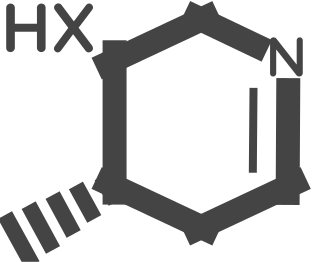 Structure

 P&D probe-likeness score

Structure formats
[[ format ]]
[[ compound[format === 'MOL' ? 'molblock' : format.toLowerCase()] ]]
Description
(extracted from source data)
DESCRIPTION
Quercitrin (Quercetin 3-rhamnoside) is a bioflavonoid compound with potential anti-inflammation, antioxidative and neuroprotective effect. Quercitrin induces apoptosis of colon cancer cells. Quercitrin can be used for the research of cardiovascular and neurological disease research[1][2].
PRICE
35
DESCRIPTION
Quercitrin (3-rhamnosyl quercetin) is a plant-derived flavonoid compound, displays antioxidant and anti-inflammatory activities. Quercitrin can be found in a number of food items such as garden tomato (var. ), German camomile, endive, and kiwi, which makes quercitrin a potential biomarker for the consumption of these food products.
(TargetMol Bioactive Compound Library)
[[ p.pathway_name ]]
[[ compound.targets[tid].gene_name ]]
Cell lines
0

Organisms
3
Compound Sets
6
Cayman Chemical Bioactives
DrugMAP
MedChem Express Bioactive Compound Library
Nuisance compounds in cellular assays
Selleckchem Bioactive Compound Library
TargetMol Bioactive Compound Library
[[ a.name ]]
[[ ligand_id ]]
free of charge
External IDs
42

Molecular Weight
448.1
Hydrogen Bond Acceptors
11
Hydrogen Bond Donors
7
Rotatable Bonds
3
Ring Count
4
Aromatic Ring Count
3
cLogP
0.49
TPSA
190.28
Fraction CSP3
0.29
Chiral centers
5.0
Largest ring
6.0
QED
0.28

Structural alerts
1
Nonspecific/NOS
Flavonoid
Nuisance compounds

Related compounds
Custom attributes
(extracted from source data)
Pathway
NF-¦ÊB
Autophagy
Immunology/Inflammation
MAPK
Metabolism
NF-κB
PI3K/Akt/mTOR signaling
MAPK/ERK Pathway
Metabolic Enzyme/Protease
Target
Apoptosis
Reactive Oxygen Species (ROS)
Ribosomal S6 Kinase (RSK)
Immunology & Inflammation related
Reactive Oxygen Species
Source data