
General
Preferred name
LUTEIN
Synonyms
Vegetable Lutein ()
Xanthophyll ()
Xantofyl ()
E 161b ()
INS NO.161B(I) ()
INS-161B(I) ()
Leutein ()
Vegetable luteol ()
E-161B ()
E-161B(I) ()
All-trans-xanthophyll ()
Oro glo 7 ()
Lutein from tagetes erecta ()
E 161 ()
All-trans-lutein ()
Floraglo ()
E161b ()
Floraglo lutein ()
Trans-lutein ()
Lutein a ()
Bo-Xan ()
Os 24 ()
NSC-59193 ()
P&D ID
PD018439
CAS
127-40-2
Tags
available
drug
natural product
nuisance
Approved by
FDA
Drug Status
approved
investigational
nutraceutical
Max Phase
3.0
Drug indication
Age-related macular degeneration

Probe control
Probe control not defined

Orthogonal probes
0
No orthogonal probes found

Similar probes
0
No structurally similar probes found
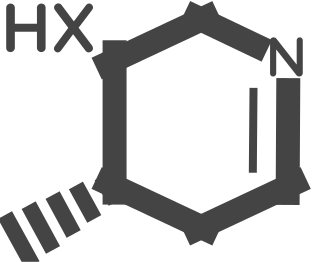 Structure

 P&D probe-likeness score

Structure formats
[[ format ]]
[[ compound[format === 'MOL' ? 'molblock' : format.toLowerCase()] ]]
Description
(extracted from source data)
PRICE
29
DESCRIPTION
Lutein (Xanthophyll) is a carotenoid with reported anti-inflammatory properties. A large body of evidence shows that lutein has several beneficial effects, especially on eye health[1]. Lutein exerts its biological activities, including anti-inflammation, anti-oxidase and anti-apoptosis, through effects on reactive oxygen species (ROS)[2][3]. Lutein is able to arrive in the brain and shows antidepressant-like and neuroprotective effects. Lutein is orally active[4].
DESCRIPTION
Lutein is a carotenoid that derives from plants including Eupatorium cannabinum (hemp agrimony), Hibiscus syriacus (rose of Sharon) and green leafy vegetables such as spinach and kale. It is a commercially used food additive and dietary supplement.
In humans ingested lutein is accumulated in the macula (central retina), where it is a component of the macular pigment (a blue light filter and antioxidant) that is important for optimal visual acuity . Its use is permitted in many jurisdictions as a safe ingredient for inclusion in food supplements that claim to maintain eye health and visual performance, although clinical benefit has not been robustly established. (GtoPdb)
In humans ingested lutein is accumulated in the macula (central retina), where it is a component of the macular pigment (a blue light filter and antioxidant) that is important for optimal visual acuity . Its use is permitted in many jurisdictions as a safe ingredient for inclusion in food supplements that claim to maintain eye health and visual performance, although clinical benefit has not been robustly established. (GtoPdb)
DESCRIPTION
1. Lutein (Xantofyl) has antitumour action. 2. Lutein has antimutagenic action. 3. Lutein has a wide range of antimicrobial action. 4. Lutein is potentially useful for treating macular degeneration.
(TargetMol Bioactive Compound Library)
[[ p.pathway_name ]]
[[ compound.targets[tid].gene_name ]]
Compound Sets
12
Cayman Chemical Bioactives
ChEMBL Drugs
Drug Repurposing Hub
DrugBank
DrugBank Approved Drugs
DrugCentral
DrugCentral Approved Drugs
Guide to Pharmacology
MedChem Express Bioactive Compound Library
Nuisance compounds in cellular assays
ReFrame library
TargetMol Bioactive Compound Library
[[ a.name ]]
[[ ligand_id ]]
free of charge
External IDs
39

Molecular Weight
568.43
Hydrogen Bond Acceptors
2
Hydrogen Bond Donors
2
Rotatable Bonds
10
Ring Count
2
Aromatic Ring Count
0
cLogP
10.4
TPSA
40.46
Fraction CSP3
0.45
Chiral centers
3.0
Largest ring
6.0
QED
0.2

Structural alerts
1
Singlet oxygen quenching
Nuisance compounds

Related compounds
Custom attributes
(extracted from source data)
Target
Antibacterial
Apoptosis
Endogenous Metabolite
Reactive Oxygen Species (ROS)
Reactive Oxygen Species
Indication
macular degeneration, cataracts, retinitis pigmentosa (RP)
MOA
Antioxidant
Pathway
Microbiology/virology
Immunology/Inflammation
Metabolic Enzyme/Protease
NF-κB
NF-¦ÊB
Source data