
General
Preferred name
AMLODIPINE
Synonyms
AMLODIPINE BESYLATE ()
Amlodipine benzenesulfonate ()
Amlodipine (+-)-form maleate ()
Amvaz ()
UK-48340 ()
(S)-Amlodipine Besylate (103129-82-4(free base)) ()
Norvasc / Istin ()
FCP-3P1 ()
Amlodipine (maleate) ()
Amlodipine (besylate) ()
Amlodipine (benzenesulfonate) ()
Amvaz, UK-48340 maleate ()
AMLODIPINE MALEATE ()
AMLODIPINE BENZOATE ()
Amlodipine-d4 (maleate) ()
UK-48340-26 ()
Amlodipine besylate component of tekamlo ()
Amlodipine besylate component of dafiro-hct amlodipine besilate ()
Norliqva ()
Lodipressin ()
Amlodipine besylate component of imprida amlodipine besilate ()
Amlodipine besylate component of lotrel ()
Amlodipine besylate component of exforge ()
Amlodipine besylate component of tribenzor ()
Amlodipine besylate component of twynsta ()
Amlor ()
Amlodipine besylate component of caduet ()
Amlodipine besylate component of onduarp ()
Antacal ()
Amlodipine besylate component of exforge hct ()
Amlodipine besylate component of amturnide ()
Amlodipine (as besilate) ()
Monopina ()
Amlodipine besylate component of exforge-hct amlodipine besilate ()
Amlodipine besylate component of prestalia ()
NSC-758922 ()
Amlodipine besylate component of exforge amlodipine besilate ()
Amlodipine besylate component of dafiro amlodipine besilate ()
Amlodipine besylate component of azor ()
Amlodipine besylate component of consensi ()
Amlodipine besylate component of copalia ()
Amlodipine Besilate ()
Norvasc ()
Amlodipine besylate component of amlessa ()
Amlodipine besylate component of imprida-hct amlodipine besilate ()
UK-48,340-26 ()
HGP-0904 ()
Amlodipino ()
HGP0904 ()
Astudal 5 ()
Norvas ()
AMLODIPINE COMPONENT OF CKD-330 ()
Istin ()
UK-48,340-11 ()
UK-48340-11 ()
Katerzia ()
P&D ID
PD010213
CAS
88150-47-4
88150-42-9
111470-99-6
1185246-15-4
Tags
available
drug
Approved by
FDA
First approval
2019
2003
1992
Drug indication
Cardiovascular disease
Hypertension
Arteriosclerosis
Drug Status
approved
Max Phase
4.0

Probe control
Probe control not defined

Orthogonal probes
0
No orthogonal probes found

Similar probes
0
No structurally similar probes found
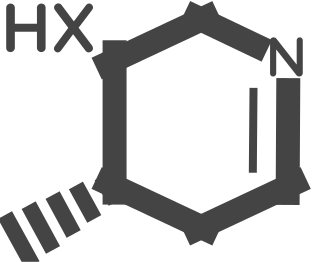 Structure

 P&D probe-likeness score

Structure formats
[[ format ]]
[[ compound[format === 'MOL' ? 'molblock' : format.toLowerCase()] ]]
Description
(extracted from source data)
PRICE
29
DESCRIPTION
Amlodipine besylate (Amlodipine benzenesulfonate), an antianginal agent and an orally active dihydropyridine calcium channel blocker, works by blocking the voltage-dependent L-type calcium channels, thereby inhibiting the initial influx of calcium. Amlodipine besylate can be used for the research of high blood pressure and cancer[1][2][3].
DESCRIPTION
Amlodipine maleate is a dihydropyridine calcium channel blocker, acts as an orally active antianginal agent. Amlodipine maleate blocks the voltage-dependent L-type calcium channels, thereby inhibiting the initial influx of calcium. Amlodipine maleate can be used for the research of high blood pressure and cancer[1][2][3].
PRICE
29
HALF-LIFE
The terminal elimination half-life of about 30â50 hours [FDA label]. Plasma elimination half-life is 56 hours in patients with impaired hepatic function, titrate slowly when administering this drug to patients with severe hepatic impairment [FDA label].
ROE
Elimination from the plasma occurs in a biphasic with a terminal elimination half-life of about 30â50 hours. Steady-state plasma levels of amlodipine are reached after 7-8 days of consecutive daily dosing [FDA label]. Amlodipine is 10% excreted as unchanged drug in the urine. Amlodipine can be initiated at normal doses in patients diagnosed with renal failure [F3757], [FDA label].
INDICATION
Amlodipine may be used alone or in combination with other antihypertensive and antianginal agents for the treatment of the following conditions [FDA label]: ⢠Hypertension ⢠Coronary artery disease ⢠Chronic stable angina ⢠Vasospastic angina (Prinzmetalâs or Variant angina) ⢠Angiographically documented coronary artery disease in patients without heart failure or an ejection fraction < 40%
TOXICITY
**Acute oral toxicity (LD50)**: 37 mg/kg (mouse) [MSDS]. **Overdose** An overdose of amlodipine could result in a high degree of peripheral vasodilatation with a possibility of reflex tachycardia. Significant and prolonged hypotension leading to shock and fatal outcomes have been reported [FDA label]. **Carcinogenesis, mutagenesis, impairment of fertility** Rats and mice treated with amlodipine maleate in the diet on a long-term basis for up to 2 years demonstrated no evidence of a carcinogenic effect of the drug. For the mouse, the highest dose was comparable to the maximum recommended human dose of 10 mg amlodipine per day. For the rat, the highest dose was measured to be about twice the maximum recommended human dose [FDA label]. Mutagenicity studies using amlodipine maleate showed no drug-related gene or chromosomal effects [FDA label]. There was no impact on the fertility of rats given oral amlodipine maleate (males for 64 days and females for 14 days before mating) at doses up to 10 mg amlodipine/kg/day (8 times the maximum recommended human dose) [FDA label]. **Use in pregnancy** The safety of amlodipine in human pregnancy or lactation has not been proven. Amlodipine is therefore considered a pregnancy category C drug [F3757]. Use amlodipine only if the potential benefit justifies the potential risk [FDA label]. **Use in nursing** Discontinue when administering amlodipine [FDA label].
METABOLISM
Amlodipine is heavily (approximately 90%) converted to inactive metabolites via hepatic breakdown with 10% of the parent compound and 60% of the metabolites found excreted in the urine. _Ex vivo_ studies have shown that about 93% of the circulating drug is bound to plasma proteins in hypertensive patients [FDA label]. Characteristics that add to amlodipine's unique pharmacologic profile include nearly complete absorption, late-peak plasma concentrations, high bioavailability, and slow hepatic breakdown [A574].
ABSORPTION
Amlodipine absorbed slowly and almost completely from the gastrointestinal tract. Peak plasma concentrations are achieved 6-12 hours after oral administration. The estimated bioavailability of amlodipine is 64-90%. Steady-state plasma amlodipine levels are achieved after 7-8 days of consecutive daily dosing. Absorption is not affected by food [FDA label].
PHARMACODYNAMICS
**General pharmacodynamic effects**; ; Amlodipine has a strong affinity for cell membranes, modulating calcium influx by inhibiting selected membrane calcium channels. This drug's unique binding properties allow for its long-acting action and less frequent dosing regimen [A573], [FDA label]. ; ; **Hemodynamic effects**; ; After the administration of therapeutic doses of amlodipine to patients diagnosed with hypertension, amlodipine causes vasodilation, which results in a reduction of supine and standing blood pressure. During these blood pressure reductions, there are no clinically significant changes in heart rate or plasma catecholamine levels with long-term use. Acute intravenous administration of amlodipine reduces arterial blood pressure and increases heart rate in patients with chronic stable angina, however, chronic oral administration of amlodipine in clinical studies did not cause clinically significant alterations in heart rate or blood pressures in patients diagnosed with angina and normal blood pressure. With long-term, once daily oral administration, antihypertensive effectiveness is maintained for at least 24 hours [FDA label]. ; ; **Electrophysiologic effects**; ; Amlodipine does not change sinoatrial (SA) nodal function or atrioventricular (AV) conduction in animals or humans. In patients who were diagnosed with chronic stable angina, the intravenous administration of 10 mg of amlodipine did not cause clinically significant alterations A-H and H-V conduction and sinus node recovery time after cardiac pacing. Patients administered amlodipine with concomitant beta-blockers produced similar results. In clinical trials in which amlodipine was given in combination with beta-blockers to patients diagnosed with hypertension or angina, no adverse effects on electrocardiographic parameters were noted. In clinical studies comprised of angina patients alone, amlodipine did not change electrocardiographic intervals or produce high degrees of AV block [FDA label]. ; ; **Effects on angina**; ; Amlodipine relieves the symptoms of chest pain associated with angina. In patients diagnosed with angina, daily administration of a single amlodipine dose increases total exercise time, the time to angina onset, and the time to 1 mm ST-segment depression on ECG studies, decreases anginal attack frequency, and decreases the requirement for nitroglycerin tablets [F3757].
INDICATION
Amlodipine may be used alone or in combination with other antihypertensive and antianginal agents for the treatment of the following conditions [FDA label]:; ; ⢠Hypertension ; ; ⢠Coronary artery disease; ; ⢠Chronic stable angina; ; ⢠Vasospastic angina (Prinzmetalâs or Variant angina) ; ; ⢠Angiographically documented coronary artery disease in patients without heart failure or an ejection fraction < 40%
HALF-LIFE
The terminal elimination half-life of about 30â50 hours [FDA label].; ; Plasma elimination half-life is 56 hours in patients with impaired hepatic function, titrate slowly when administering this drug to patients with severe hepatic impairment [FDA label].;
DESCRIPTION
Amlodipine is a long-acting dihydropyridine class calcium channel blocker.
Amlodipine is on the World Health Organisation's List of Essential Medicines. Click here to access the pdf version of the WHO's 21st Essential Medicines list (2019). (GtoPdb)
Amlodipine is on the World Health Organisation's List of Essential Medicines. Click here to access the pdf version of the WHO's 21st Essential Medicines list (2019). (GtoPdb)
PHARMACODYNAMICS
**General pharmacodynamic effects** Amlodipine has a strong affinity for cell membranes, modulating calcium influx by inhibiting selected membrane calcium channels. This drug's unique binding properties allow for its long-acting action and less frequent dosing regimen [A573], [FDA label]. **Hemodynamic effects** After the administration of therapeutic doses of amlodipine to patients diagnosed with hypertension, amlodipine causes vasodilation, which results in a reduction of supine and standing blood pressure. During these blood pressure reductions, there are no clinically significant changes in heart rate or plasma catecholamine levels with long-term use. Acute intravenous administration of amlodipine reduces arterial blood pressure and increases heart rate in patients with chronic stable angina, however, chronic oral administration of amlodipine in clinical studies did not cause clinically significant alterations in heart rate or blood pressures in patients diagnosed with angina and normal blood pressure. With long-term, once daily oral administration, antihypertensive effectiveness is maintained for at least 24 hours [FDA label]. **Electrophysiologic effects** Amlodipine does not change sinoatrial (SA) nodal function or atrioventricular (AV) conduction in animals or humans. In patients who were diagnosed with chronic stable angina, the intravenous administration of 10 mg of amlodipine did not cause clinically significant alterations A-H and H-V conduction and sinus node recovery time after cardiac pacing. Patients administered amlodipine with concomitant beta-blockers produced similar results. In clinical trials in which amlodipine was given in combination with beta-blockers to patients diagnosed with hypertension or angina, no adverse effects on electrocardiographic parameters were noted. In clinical studies comprised of angina patients alone, amlodipine did not change electrocardiographic intervals or produce high degrees of AV block [FDA label]. **Effects on angina** Amlodipine relieves the symptoms of chest pain associated with angina. In patients diagnosed with angina, daily administration of a single amlodipine dose increases total exercise time, the time to angina onset, and the time to 1 mm ST-segment depression on ECG studies, decreases anginal attack frequency, and decreases the requirement for nitroglycerin tablets [F3757].
MOA
**Mechanism of action on blood pressure** Amlodipine is considered a peripheral arterial vasodilator that exerts its action directly on vascular smooth muscle to lead to a reduction in peripheral vascular resistance, causing a decrease in blood pressure. Amlodipine is a dihydropyridine calcium antagonist (calcium ion antagonist or slow-channel blocker) that inhibits the influx of calcium ions into both vascular smooth muscle and cardiac muscle. Experimental studies imply that amlodipine binds to both _dihydropyridine_ and _nondihydropyridine_ binding sites, located on cell membranes. The contraction of cardiac muscle and vascular smooth muscle are dependent on the movement of extracellular calcium ions into these cells by specific ion channels. Amlodipine blocks calcium ion influx across cell membranes with selectivity. A stronger effect of amlodipine is exerted on vascular smooth muscle cells than on cardiac muscle cells [FDA label]. Direct actions of amlodipine on vascular smooth muscle result in reduced blood pressure [F3757]. **Mechanism of action in angina** The exact mechanism by which amlodipine relieves the symptoms of angina have not been fully elucidated to this date, however, the mechanism of action is likely twofold: Amlodipine has a dilating effect on peripheral arterioles, reducing the total peripheral resistance (afterload) against which the cardiac muscle functions. Since the heart rate remains stable during amlodipine administration, the reduced work of the heart reduces both myocardial energy use and oxygen requirements [F3757]. Dilatation of the main coronary arteries and coronary arterioles, both in healthy and ischemic areas, is another possible mechanism of amlodipine reduction of blood pressure. The dilatation causes an increase in myocardial oxygen delivery in patients experiencing coronary artery spasm (Prinzmetal's or variant angina) and reduces coronary vasoconstriction caused by smoking [F3757].
MOA
**Mechanism of action on blood pressure**; ; Amlodipine is considered a peripheral arterial vasodilator that exerts its action directly on vascular smooth muscle to lead to a reduction in peripheral vascular resistance, causing a decrease in blood pressure. Amlodipine is a dihydropyridine calcium antagonist (calcium ion antagonist or slow-channel blocker) that inhibits the influx of calcium ions into both vascular smooth muscle and cardiac muscle. Experimental studies imply that amlodipine binds to both _dihydropyridine_ and _nondihydropyridine_ binding sites, located on cell membranes. The contraction of cardiac muscle and vascular smooth muscle are dependent on the movement of extracellular calcium ions into these cells by specific ion channels. Amlodipine blocks calcium ion influx across cell membranes with selectivity. A stronger effect of amlodipine is exerted on vascular smooth muscle cells than on cardiac muscle cells [FDA label]. Direct actions of amlodipine on vascular smooth muscle result in reduced blood pressure [F3757]. ; ; **Mechanism of action in angina**; ; The exact mechanism by which amlodipine relieves the symptoms of angina have not been fully elucidated to this date, however, the mechanism of action is likely twofold:; ; Amlodipine has a dilating effect on peripheral arterioles, reducing the total peripheral resistance (afterload) against which the cardiac muscle functions. Since the heart rate remains stable during amlodipine administration, the reduced work of the heart reduces both myocardial energy use and oxygen requirements [F3757].; ; Dilatation of the main coronary arteries and coronary arterioles, both in healthy and ischemic areas, is another possible mechanism of amlodipine reduction of blood pressure. The dilatation causes an increase in myocardial oxygen delivery in patients experiencing coronary artery spasm (Prinzmetal's or variant angina) and reduces coronary vasoconstriction caused by smoking [F3757].
TOXICITY
**Acute oral toxicity (LD50)**: 37 mg/kg (mouse) [MSDS]. ; ; **Overdose**; ; An overdose of amlodipine could result in a high degree of peripheral vasodilatation with a possibility of reflex tachycardia. Significant and prolonged hypotension leading to shock and fatal outcomes have been reported [FDA label].; ; **Carcinogenesis, mutagenesis, impairment of fertility**; ; Rats and mice treated with amlodipine maleate in the diet on a long-term basis for up to 2 years demonstrated no evidence of a carcinogenic effect of the drug. For the mouse, the highest dose was comparable to the maximum recommended human dose of 10 mg amlodipine per day. For the rat, the highest dose was measured to be about twice the maximum recommended human dose [FDA label].; ; Mutagenicity studies using amlodipine maleate showed no drug-related gene or chromosomal effects [FDA label].; ; There was no impact on the fertility of rats given oral amlodipine maleate (males for 64 days and females for 14 days before mating) at doses up to 10 mg amlodipine/kg/day (8 times the maximum recommended human dose) [FDA label].; ; **Use in pregnancy**; ; The safety of amlodipine in human pregnancy or lactation has not been proven. Amlodipine is therefore considered a pregnancy category C drug [F3757]. ; Use amlodipine only if the potential benefit justifies the potential risk [FDA label]. ; ; **Use in nursing**; ; Discontinue when administering amlodipine [FDA label].
DESCRIPTION
Amlodipine, an antianginal agent and an orally active dihydropyridine calcium channel blocker, works by blocking the voltage-dependent L-type calcium channels, thereby inhibiting the initial influx of calcium. Amlodipine can be used for the research of high blood pressure and cancer[1][2][3].
DESCRIPTION
Ca2+ channel blocker (L-type)
(Tocriscreen Plus)
DESCRIPTION
Ca2+ channel blocker (L-type)
(Tocriscreen Total)
DESCRIPTION
Na+ channel blocker; antiarrhythmic agent
(Tocris Bioactive Compound Library)
DESCRIPTION
Amlodipine is a calcium channel blocker used to treat hypertension and angina.
(Enamine Bioactive Compounds)
DESCRIPTION
Amlodipine Besylate(Amlodipine benzenesulfonate) is a long-lasting calcium channel blocker.
(TargetMol Bioactive Compound Library)
DESCRIPTION
Amlodipine (UK-48340) is a synthetic dihydropyridine and a calcium channel blocker with antihypertensive and antianginal properties.
(TargetMol Bioactive Compound Library)
DESCRIPTION
Amlodipine maleate (Amvaz) is an orally active dihydropyridine calcium channel blocker that inhibits calcium inward flow by blocking voltage-dependent L-type calcium channels.Amlodipine maleate is used in the study of hypertension and cancer.
(TargetMol Bioactive Compound Library)
[[ p.pathway_name ]]
[[ compound.targets[tid].gene_name ]]

Cell lines
1

Organisms
7

Compound Sets
33
AdooQ Bioactive Compound Library
Axon Medchem Screening Library
ChEMBL Approved Drugs
ChEMBL Drugs
Concise Guide to Pharmacology 2021/22
Concise Guide to Pharmacology 2023/24
CZ-OPENSCREEN Bioactive Library
DrugBank
DrugBank Approved Drugs
DrugCentral
DrugCentral Approved Drugs
DrugMAP Approved Drugs
DrugMatrix
Enamine Bioactive Compounds
Enamine BioReference Compounds
EU-OPENSCREEN Bioactive Compound Library
Guide to Pharmacology
JUMP-Target 1 Compound Set
LSP-MoA library (Laboratory of Systems Pharmacology)
Natural product-based probes and drugs
NCATS Inxight Approved Drugs
NPC Screening Collection
Prestwick Chemical Library
ReFrame library
Selleckchem Bioactive Compound Library
The Spectrum Collection
Tocris Bioactive Compound Library
Tocriscreen Plus
Tocriscreen Total
[[ a.name ]]
[[ ligand_id ]]
free of charge
External IDs
94

Molecular Weight
408.15
Hydrogen Bond Acceptors
7
Hydrogen Bond Donors
2
Rotatable Bonds
8
Ring Count
2
Aromatic Ring Count
1
cLogP
2.27
TPSA
99.88
Fraction CSP3
0.4
Chiral centers
1.0
Largest ring
6.0
QED
0.5

Structural alerts
0
No structural alerts detected

Related compounds
Custom attributes
(extracted from source data)
Target Type
Ion Channels
Target
Calcium Channel
Ca channel blocker
CACNA2D3
Primary Target
CaV1.x Channels (L-type)
MOA
Calcium Channel inhibitor
Blocker
Therapeutic Indication
Antihypertensive
Therapeutic Class
Cardiovascular
Antihypertensive Agents
Pathway
Membrane Transporter/Ion Channel
Neuronal Signaling
Metabolism
Source data