
General
Preferred name
paroxetine
Synonyms
PAROXETINE HYDROCHLORIDE ()
Paroxetine hydrochloride hemihydrate (MW = 374.83) ()
Paroxetine maleate ()
Paroxetine HCl ()
BRL29060 hydrochloride ()
FG-7051 ()
BRL29060A ()
Paroxetine (HCl) ()
Paxil ()
Seroxat ()
Paroxetine (maleate) ()
Paroxetine hydrochloride hemihydrate ()
Paroxetine (hydrochloride) ()
(-)-Paroxetine hydrochloride ()
BRL29060 (maleate) ()
BRL29060 ()
PAROXETINE MESYLATE ()
BRL-29060A, FG-7051 ()
BRL-29060A mesylate,FG-7051 mesylate ()
BRL29060 (hydrochloride) ()
AROPAX ()
DEROXAT ()
NSC-758654 ()
PAROXETINE HYDROCHLORIDE ANHYDROUS ()
PAROXETINE HYDROCHLORIDE HYDRATE ()
PAXIL CR ()
Frosinor ()
Paroxetina ()
(-)3s,4r-paroxetine ()
Daparox ()
Parogen ()
Paxpar ()
BRL-29060 ()
Xetanor ()
Arketis ()
BRL 29060 ()
Besitram ()
Arotin ()
Motivan ()
Casbol ()
Paroxetine ()
Paroxetine methanesulphonate ()
Brisdelle ()
Paroxetine methanesulfonate ()
POT.MES ()
Paroxetine mesilate ()
PO-T.MES ()
Pexeva ()
Mesafem ()
[3H]paroxetine ()
[3H]-Paroxetine ()
[3H]PAROXETINE ()
Paroxetine-d6 (hydrochloride) ()
Paroxetine (maleate) (CRM) ()
P&D ID
PD010063
CAS
78246-49-8
61869-08-7
64006-44-6
110429-35-1
217797-14-3
Tags
available
drug
Approved by
FDA
First approval
1992
2003
Drug indication
Hot flashes
Anxiety
Depression
panic disorder
Drug Status
approved
investigational
Max Phase
4.0

Probe control
Probe control not defined

Orthogonal probes
0
No orthogonal probes found

Similar probes
0
No structurally similar probes found
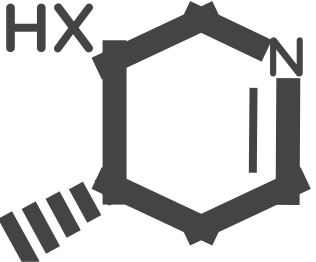 Structure

 P&D probe-likeness score

Structure formats
[[ format ]]
[[ compound[format === 'MOL' ? 'molblock' : format.toLowerCase()] ]]
Description
(extracted from source data)
PRICE
29
DESCRIPTION
Paroxetine hydrochloride is a potent selective serotonin-reuptake inhibitor, commonly prescribed as an GRK2 inhibitor with IC50 of 14?¦ÌM. Paroxetine hydrochloride can be used for the research of depressive disorder[1][2][3].
DESCRIPTION
Paroxetine is a selective serotonin-reuptake inhibitor (SSRI) antidepressant. An X-ray structure of crystals of paroxetine bound SERT, shows a single central binding site (see PDB entry 5I6X)..
(GtoPdb)
PRICE
29
DESCRIPTION
Paroxetine is an oral inhibitor that falls under the category of selective serotonin reuptake inhibitors (SSRIs). Paroxetine is also a very weak norepinephrine (NE) reuptake inhibitor, capable of inducing cell apoptosis and having anti-tumor activity. Paroxetine has antidepressant, anti-anxiety, and pain-relieving effects, and it can help improve conditions like obsessive-compulsive disorder, panic disorder, post-traumatic stress disorder, premenstrual anxiety, and chronic headaches[1][2][3][4].
PRICE
29
DESCRIPTION
Paroxetine is a selective serotonin reuptake inhibitor used to treat major depressive disorder, panic disorder, OCD, social phobia, generalized anxiety disorder, the vasomotor symptoms of menopause, and premenstrual dysphoric disorder.
(Enamine Bioactive Compounds)
DESCRIPTION
Selective serotonin reuptake inhibitor; antidepressant;Sold with permission of GlaxoSmithKline.;Actual molecular weight = 374.83 to account for 1/2 mole of water.
(LOPAC library)
DESCRIPTION
Paroxetine hydrochloride (Paroxetine HCl) is a serotonin uptake inhibitor that is effective in the treatment of depression.
(TargetMol Bioactive Compound Library)
DESCRIPTION
Paroxetine is a inhibitor of serotonin uptake that is effective in the treatment of depression.
(TargetMol Bioactive Compound Library)
DESCRIPTION
Potent inhibitor of vesicular monoamine transport
(Tocris Bioactive Compound Library)
DESCRIPTION
Highly potent and selective 5-HT uptake inhibitor
(Tocriscreen Total)
DESCRIPTION
Paroxetine maleate is a highly potent and selective 5-HT uptake inhibitor that binds with high affinity to the serotonin transporter (Ki = 0.05 nM). Ki = 1.1, 350 and 1100 nM for inhibition of [3H]-5-HT, [3H]-l-NA and [3H]-DA uptake respectively.
(BOC Sciences Bioactive Compounds)
DESCRIPTION
Paroxetine hydrochloride hemihydrate is a antidepressant agents known as selective serotonin-reuptake inhibitors (SSRIs).
(BOC Sciences Bioactive Compounds)
DESCRIPTION
Paroxetine hydrochloride hemihydrate (Paxil) is an effective and selective serotonin reuptake inhibitor (SSRI).
(TargetMol Bioactive Compound Library)
[[ p.pathway_name ]]
[[ compound.targets[tid].gene_name ]]

Cell lines
0

Organisms
7

Compound Sets
36
AdooQ Bioactive Compound Library
BOC Sciences Bioactive Compounds
ChEMBL Approved Drugs
ChEMBL Drugs
CZ-OPENSCREEN Bioactive Library
Drug Repurposing Hub
DrugBank
DrugBank Approved Drugs
DrugCentral
DrugCentral Approved Drugs
DrugMAP
DrugMAP Approved Drugs
Enamine Bioactive Compounds
Enamine BioReference Compounds
EU-OPENSCREEN Bioactive Compound Library
EUbOPEN Chemogenomics Library
LOPAC library
LSP-MoA library (Laboratory of Systems Pharmacology)
NCATS Inxight Approved Drugs
NIH Clinical Collections (NCC)
NPC Screening Collection
Nuisance compounds in cellular assays
Prestwick Chemical Library
Selleckchem Bioactive Compound Library
The Spectrum Collection
Tocris Bioactive Compound Library
Tocriscreen Total
[[ a.name ]]
[[ ligand_id ]]
free of charge
External IDs
497

Molecular Weight
329.14
Hydrogen Bond Acceptors
4
Hydrogen Bond Donors
1
Rotatable Bonds
4
Ring Count
4
Aromatic Ring Count
2
cLogP
3.33
TPSA
39.72
Fraction CSP3
0.37
Chiral centers
2.0
Largest ring
6.0
QED
0.93

Structural alerts
1
CAD
Nuisance compounds

Related compounds
Custom attributes
(extracted from source data)
Selectivity
Reuptake
Target
serotonin
serotonin reuptake
CHRM1, CHRM2, CHRM3, CHRM4, CHRM5, HTR2A, SLC6A2, SLC6A4
Serotonin Transporter
Adrenergic Receptor
P2X Receptor
G Protein-coupled Receptor Kinase (GRK)
5-HT
AChR
GRK2
Primary Target
5-HT Transporters
MOA
Inhibitor
selective serotonin reuptake inhibitor (SSRI)
Indication
depression, obsessive compulsive disorder (OCD), generalized anxiety disorder (GAD), panic disorders, posttraumatic stress disorder, social anxiety disorder
Pathway
Autophagy
GPCR/G protein
Neuroscience
Neuronal Signaling
Apoptosis
Membrane Transporter/Ion Channel
Therapeutic Class
Antidepressants
Recommended Cell Concentration
None
Source data