
General
Preferred name
dextrothyroxine
Synonyms
Dethyrona ()
Detyroxin ()
Dextroid ()
Biotirmone ()
Dextroxin ()
Debetrol ()
DEXTROTHYROXINE SODIUM ()
D-Thyroxine ()
DL-thyroxine ()
D-T4 ()
Dextrothyroxine sodium anhydrous ()
D-thyroxine sodium salt ()
Choloxin ()
Monosodium d-thyroxine hydrate ()
Dextrothyroxine sodique ()
Anhydrous dextrothyroxine sodium ()
Dextrothyroxine sodium hydrate ()
Dextrotiroxina de sodio ()
Sodium dextrothyroxine ()
P&D ID
PD009988
CAS
51-49-0
7054-08-2
137-53-1
Tags
available
drug
Approved by
FDA
First approval
1967
Drug indication
High blood cholesterol level
Cardiovascular disease
Myocardial infarction
Drug Status
approved
withdrawn
Max Phase
4.0

Probe control
Probe control not defined

Orthogonal probes
0
No orthogonal probes found

Similar probes
0
No structurally similar probes found
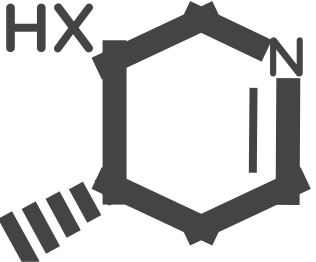 Structure

 P&D probe-likeness score

Structure formats
[[ format ]]
[[ compound[format === 'MOL' ? 'molblock' : format.toLowerCase()] ]]
Description
(extracted from source data)
DESCRIPTION
The INN record for this compound and the US FDA approval, are for the sodium salt. This drug is the dextrorotary isomer of synthetic thyroxine and acts as an antihyperlipidemic.
(GtoPdb)
MOA
Dextrothyroxine is a antihyperlipidemic. The mechanism of action is not completely understood, but dextrothyroxine apparently acts in the liver to stimulate formation of low-density lipoprotein (LDL) and, to a much greater extent, to increase catabolism of LDL. This leads to increased excretion of cholesterol and bile acids via the biliary route into the feces, with a resulting reduction in serum cholesterol and LDL. Dextrothyroxine has no significant effect on high-density lipoproteins (HDL).; Inherently, it will also bind to thyroid receptors and as it is a prohormone, it will bind as a substrate to iodide peroxidase.
DESCRIPTION
D-Thyroxine (D-T4) is an orally active thyroid hormone that inhibits the secretion of TSH. D-Thyroxine can inhibit goiter, promote metamorphosis of tadpoles and influence cholesterol metabolism. D-Thyroxine can be used for the study of hypercholesterolemia[1][2][3].
PRICE
39
DESCRIPTION
D-Thyroxine is the dextrorotary isomer of thyroxine with antihyperlipidemic activity. It stimulates the formation of low-density lipoprotein (LDL) and increases the catabolism of LDL thereby leading to increased excretion of cholesterol and bile acids via the biliary route. It is released from thyroglobulin by proteolysis and secreted into the blood. It is one of the thyroid hormones involved in the maintenance of metabolic homeostasis and has been used to treat hyperlipidemia. It is used as an cholesterol-lowering drug but was pulled due to cardiac side-effects. It also increases hepatic lipase which in turn improves utilization of triglycerides, improving apolipoprotein E cholesterol particles.
(BOC Sciences Bioactive Compounds)
DESCRIPTION
D-Thyroxine (Dextroxin) could lower cholesterol and also increases hepatic lipase which in turn improves utilization of triglycerides, leading to improve apolipoprotein E cholesterol particles.
(TargetMol Bioactive Compound Library)
[[ p.pathway_name ]]
[[ compound.targets[tid].gene_name ]]
Compound Sets
23
BOC Sciences Bioactive Compounds
ChEMBL Approved Drugs
ChEMBL Drugs
Concise Guide to Pharmacology 2017/18
Concise Guide to Pharmacology 2019/20
Concise Guide to Pharmacology 2021/22
Concise Guide to Pharmacology 2023/24
Concise Guide to Pharmacology 2025/26
DrugBank
DrugBank Approved Drugs
DrugCentral
DrugCentral Approved Drugs
DrugMAP
DrugMAP Approved Drugs
Guide to Pharmacology
MedChem Express Bioactive Compound Library
NPC Screening Collection
Other bioactive compounds
Selleckchem Bioactive Compound Library
TargetMol Bioactive Compound Library
Withdrawn 2.0
ZINC Tool Compounds
[[ a.name ]]
[[ ligand_id ]]
free of charge
External IDs
76

Molecular Weight
776.69
Hydrogen Bond Acceptors
4
Hydrogen Bond Donors
3
Rotatable Bonds
5
Ring Count
2
Aromatic Ring Count
2
cLogP
4.56
TPSA
92.78
Fraction CSP3
0.13
Chiral centers
1.0
Largest ring
6.0
QED
0.39

Structural alerts
0
No structural alerts detected

Related compounds
Custom attributes
(extracted from source data)
ATC
C10AX01
Solubility
Acidic Alcohol (Slightly), DMSO (Slightly)
Target
THR
Source data