
General
Preferred name
dutasteride
Synonyms
GG 745 ()
Avodart ()
GI 198745 ()
Dutasteride (Avodart) ()
Duagen ()
Dutasterid ()
GI198745, GG-745 ()
GI-198745 ()
NSC-759880 ()
Duastride ()
GG-745 ()
Avolve ()
NSC-740477 ()
Dutasteride component of jalyn ()
Dutasterida ()
Dutasteride-13C6 ()
P&D ID
PD009792
CAS
164656-23-9
1217685-27-2
Tags
available
drug
Approved by
FDA
First approval
2001
Drug indication
Prostate cancer
Benign prostatic hyperplasia
prostate carcinoma
Drug Status
approved
investigational
Max Phase
4.0

Probe control
Probe control not defined

Orthogonal probes
0
No orthogonal probes found

Similar probes
0
No structurally similar probes found
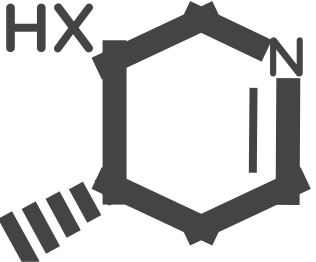 Structure

 P&D probe-likeness score

Structure formats
[[ format ]]
[[ compound[format === 'MOL' ? 'molblock' : format.toLowerCase()] ]]
Description
(extracted from source data)
DESCRIPTION
Dutasteride is a synthetic androstane steroid that acts as a 5α-reductase inhibitor. It inhibits conversion of to (DHT). There are three 5α-reductase isozymes: SRD5A1, SRD5A2 and SRD5A3, all of which are inhibited by dutasteride .
(GtoPdb)
DESCRIPTION
Dutasteride is a 5α-reductase inhibitor, which inhibits conversion of to (DHT). There are three 5α-reductase isozymes: SRD5A1, SRD5A2 and SRD5A3, all of which are inhibited by dutasteride .
MOA
The 5α-reductase is a nuclear-bound steroid intracellular enzyme primarily located in the prostatic stromal cell that converts the androgen testosterone into the more active metabolite, 5α-dihydrotestosterone (DHT).[A2132] DHT is considered to be the primary androgen playing a role in the initial development and subsequent enlargement of the prostate gland. It serves as the hormonal mediator for the hyperplasia upon accumulation within the prostate gland.[A178270] DHT displays a higher affinity towards androgen receptors in the prostate gland compared to testosterone[T28] and by acting on the androgen receptors, DHT modulates genes that are responsible for cell proliferation.[A178279] Responsible for the synthesis of approximately one-third of circulating DHT, type I 5α-reductase is predominant in the sebaceous glands of most regions of skin, including the scalp, and liver. The type II 5a-reductase isozyme is primarily found in the prostate, seminal vesicles, epididymides, and hair follicles as well as liver, and is responsible for two-thirds of circulating DHT.[label] Due to its dual inhibition of both isoenzymes of 5α-reductase, dutasteride causes a near-complete suppression of DHT.[A178348] Compared to a 70% reduction of serum DHT levels caused by [finasteride], a near-complete suppression of serum DHT-more than 90% is seen with dutasteride.[A178378]; ; By forming a stable complex with both type II and type II 5α-reductase, dutasteride inhibits its enzymatic action of converting testosterone to 5α-dihydrotestosterone (DHT), which is the androgen primarily responsible for the initial development and subsequent enlargement of the prostate gland. It is proposed that DHT is the principal androgen responsible for prostatic growth in later life-normal masculinization of the external genitalia and maturation of the prostate gland during development-thus reducing the serum DHT levels results in reduced prostatic volume and increased epithelial apoptosis.[A178375] Dutasteride is a competitive and specific inhibitor of both Type I and Type II 5α-reductase isoenzymes and when evaluated under _in vitro_ and _in vivo_ conditions, the dissociation of the drug from the drug-enzyme complex is reported to be extremely slow.[label] Dutasteride does not bind to the human androgen receptor.[label]
INDICATION
Indicated for the treatment of symptomatic benign prostatic hyperplasia (BPH) in men with an enlarged prostate gland to improve symptoms, and reduce the risk of acute urinary retention and the need for BPH-related surgery alone or in combination with [tamsulosin].[label]
ROE
Dutasteride and its metabolites mainly undergo fecal excretion. About 1-15% of the dose is excreted as the unchanged parent compound, while 2-90% of the total dose is excreted in the form of dutasteride-related metabolites in the feces. Trace amounts of unchanged dutasteride, with less than 1%, can also be detected in the urine. Therefore, on average, the dose unaccounted for approximated 55%, with a range between 5% and 97%.[label]
HALF-LIFE
The terminal elimination half-life of dutasteride is approximately 5 weeks at steady state. This long half-life accounts for the serum concentrations remaining detectable for up to 4 to 6 months after discontinuation of treatment.[label]
METABOLISM
Dutasteride undergoes extensive hepatic metabolism mediated by CYP3A4 and CYP3A5. 4â²-hydroxydutasteride, 6-hydroxydutasteride, 6,4â²-dihydroxydutasteride, 1,2-dihydrodutasteride, and 15-hydroxydutasteride metabolites are formed. 2 minor metabolites - 6,4â²-dihydroxydutasteride and 15-hydroxydutasteride - can also be detected. According to _in vitro_ studies, 4â²-hydroxydutasteride and 1,2-dihydrodutasteride mediated inhibitory actions against both isoforms of 5α-reductase but with lower potency when compared to the parent drug. The activity of 6β-hydroxydutasteride is comparable to that of dutasteride.[label]
ABSORPTION
Following oral administration of a single dose of 0.5 mg dutasteride, the peak serum concentrations were reached within 2 to 3 hours. Following daily oral administration of 0.5 mg dutasteride, the steady-state concentration of 40 ng/mL is expected to be achieved at 6 months following initial administration. In healthy subjects, the absolute bioavailability was 60%, ranging from 40% to 94%. While food intake reduced the maximum serum concentrations by 10 to 15%, food intake is reported to have a negligible effect on the bioavailability of the drug.[label]
PHARMACODYNAMICS
Dutasteride is a synthetic 4-azasteroid compound that selectively inhibits both the type I and type II isoforms of steroid 5α-reductase, an intracellular enzyme that converts testosterone to 5α-dihydrotestosterone (DHT). Dutasteride works by reducing the levels of circulating DHT. It was also shown to reduce the size of the prostate gland, improve urinary flow, and symptoms of benign prostatic hyperplasia alone or in combination with tamsulosin.[L6256] The effect of the reduction of DHT by dutasteride is dose-dependent, with the maximum effect observed within 1-2 weeks following initial administration.[label] ; ; After 1 and 2 weeks of daily dosing with dutasteride 0.5 mg, median serum DHT concentrations were reduced by 85% and 90%, respectively.[label] The serum concentrations of DHT were maintained to be decreased by more than 90% in 85% of patients following 1 years' administration of oral dutasteride 0.5 mg/day.[A178345] As evident from the clinical studies, dutasteride may also cause decreases in serum PSA in the presence of prostate cancer.[label]
DESCRIPTION
Dutasteride (GG745) is a potent inhibitor of both 5¦Á-reductase isozymes. Dutasteride may possess off-target effects on the androgen receptor (AR) due to its structural similarity to DHT[1].
PRICE
53
DESCRIPTION
Dutasteride is an antiandrogenic compound that is used for the treatment of symptomatic benign prostatic hyperplasia (BPH) in adult males by inhibiting 5-alpha reductase.
(Enamine Bioactive Compounds)
DESCRIPTION
Dutasteride (GI 198745) is a 5-alpha-reductase inhibitor that inhibits both type-1 and type2 isoforms of the enzyme and is used to treat benign prostatic hyperplasia.
(TargetMol Bioactive Compound Library)
[[ p.pathway_name ]]
[[ compound.targets[tid].gene_name ]]

Compound Sets
24
AdooQ Bioactive Compound Library
CeMM library of unique drugs (CLOUD)
ChEMBL Approved Drugs
ChEMBL Drugs
CZ-OPENSCREEN Bioactive Library
Drug Repurposing Hub
DrugBank
DrugBank Approved Drugs
DrugCentral
DrugCentral Approved Drugs
DrugMAP
DrugMAP Approved Drugs
Enamine Bioactive Compounds
Enamine BioReference Compounds
EU-OPENSCREEN Bioactive Compound Library
Guide to Pharmacology
LSP-MoA library (Laboratory of Systems Pharmacology)
MedChem Express Bioactive Compound Library
Natural product-based probes and drugs
NCATS Inxight Approved Drugs
ReFrame library
Selleckchem Bioactive Compound Library
TargetMol Bioactive Compound Library
[[ a.name ]]
[[ ligand_id ]]
free of charge
External IDs
153

Molecular Weight
528.22
Hydrogen Bond Acceptors
2
Hydrogen Bond Donors
2
Rotatable Bonds
2
Ring Count
5
Aromatic Ring Count
1
cLogP
6.58
TPSA
58.2
Fraction CSP3
0.63
Chiral centers
7.0
Largest ring
6.0
QED
0.43

Structural alerts
0
No structural alerts detected

Related compounds
Custom attributes
(extracted from source data)
MOA
steroid 5-alpha reductase inhibitor
5 alpha reductase inhibitor
Target
Steroid 5-alpha-reductase
5-α reductase
Apoptosis
SRD5A1, SRD5A2, SRD5A3
5-alpha Reductase
5 alpha Reductase
Indication
benign prostatic hyperplasia (BPH)
Biosynthetic Origin
Terpenoid (Steroid)
Therapeutic Indication
Benign Prostatic Hypertrophy
Therapeutic Class
Hormone Therapy
Anticancer Agents
Pathway
Metabolic Enzyme/Protease
Endocrinology/Hormones
Metabolism
Source data