
General
Preferred name
BERBERINE
Synonyms
BERBERINE CHLORIDE ()
Berberine tannate ()
Berberin ()
Umbellatine ()
Berberine hydrochloride ()
Benzodioxide ()
Natural Yellow 18 ()
Natural Yellow 18 chloride hydrate ()
Berberine Bisulfate ()
Umbellatine Sulfate ()
AI3-61947 ()
Berberin sulfate ()
Berberine sulphate ()
Berberal ()
BERBERINE SULFATE ()
Berberine HCl ()
Berberine (chloride hydrate) ()
Berberine (chloride) ()
Berberine (sulfate) ()
Natural Yellow 18 (chloride hydrate) ()
Natural Yellow 18 (chloride) ()
Natural Yellow 18 (sulfate) ()
Natural Yellow 18 chloride ()
Berberine chloride hydrate ()
Berberine chloride (NSC 646666) ()
Berberine hydrogen sulphate ()
Berberinum ()
NSC-163088 ()
GNF-Pf-4545 ()
NSC-646666 ()
Thalsine ()
Berberone ()
Umbellatin ()
Berbericine ()
Majarine ()
Berberine sulfate anhydrous ()
NSC-5355 ()
Neutral berberine sulfate ()
Erben ()
Berberine sulfate (2:1) ()
Berberine-d6 (chloride) ()
P&D ID
PD006954
CAS
2086-83-1
68030-18-2
633-66-9
633-65-8
141433-60-5
316-41-6
6190-33-6
69352-97-2
Tags
available
drug candidate
natural product
drug
nuisance
Drug Status
approved
withdrawn
investigational
Max Phase
1.0
4.0
Drug indication
Non-alcoholic fatty liver disease
Ulcerative colitis

Probe control
Probe control not defined

Orthogonal probes
0
No orthogonal probes found

Similar probes
0
No structurally similar probes found
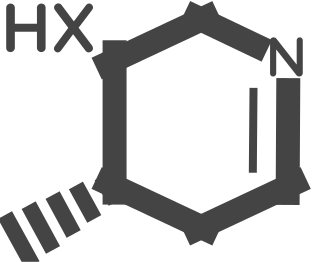 Structure

 P&D probe-likeness score

Structure formats
[[ format ]]
[[ compound[format === 'MOL' ? 'molblock' : format.toLowerCase()] ]]
Description
(extracted from source data)
PRICE
29
DESCRIPTION
Berberine chloride is an alkaloid that acts as an antibiotic. Berberine chloride induces reactive oxygen species (ROS) generation and inhibits DNA topoisomerase. Antineoplastic properties[1].
PRICE
29
DESCRIPTION
Berberine chloride hydrate (Natural Yellow 18 chloride hydrate) is an alkaloid that acts as an antibiotic. Berberine chloride hydrate induces reactive oxygen species (ROS) generation and inhibits DNA topoisomerase. Antineoplastic properties[1].
DESCRIPTION
Berberine is a botanical alkaloid compound that has found use in traditional medicine in some countries. It is poorly orally bioavailable and interacts adversely with prescription drugs.
(GtoPdb)
PRICE
29
PRICE
29
PRICE
32
DESCRIPTION
Berberine chloride is a quaternary ammonium salt from the group of isoquinoline alkaloid that has antibacterial, anti-inflammatory, antitumor, anti-obesity, and hypercholesterolemic activity. Berberine has been reported as an acetylcholinesterase (AChE) inhibitor.
(Enamine Bioactive Compounds)
DESCRIPTION
Berberine chloride (Natural Yellow 18) is an alkaloid from Hydrastis canadensis L., Berberidaceae and also found in many other plants. It is relatively toxic to parenterally but has been used orally for various fungal and parasitic infections and an anti-diarrheal.
(TargetMol Bioactive Compound Library)
DESCRIPTION
The plant-based alkaloid berberine has potential therapeutic applications for breast cancer, although a better understanding of the genes and cellular pathways regulated by this compound is needed to define the mechanism of its action in cancer treatment. In this review, the molecular targets of berberine in various cancers, particularly breast cancer, are discussed. Berberine was shown to be effective in inhibiting cell proliferation and promoting apoptosis in various cancerous cells. Some signaling pathways affected by berberine, including the MAP (mitogen-activated protein) kinase and Wnt/β-catenin pathways, are critical for reducing cellular migration and sensitivity to various growth factors. Treatment with BBR(Berberine) in rats on the atherogenic diet reduced plasma total cholesterol and nonHDL cholesterol levels by 29%-33% and 31%-41%, respectively, with no significant differences being observed among the three doses. Berberine induced both apoptotic and autophagic death of HepG2 cells, which was associated with a significant activation of AMPK and an increased expression of the inactive form of acetyl-CoA carboxylase (ACC). Berberine did not show major effects on viability of HEK-293 embryonic kidney and HCT116 colon carcinoma cells and was not toxic in concentrations up to 20 μM. Berberine inhibited β-catenin transcriptional activity and attenuated anchorage-independent growth. As a result of berberine treatment, cellular levels of active β-catenin were reduced concomitant with an increase in the expression of E-cadherin.
(BOC Sciences Bioactive Compounds)
DESCRIPTION
Berberine chloride hydrate (Natural Yellow 18 chloride hydrate) is an alkaloid with antibiotic properties, antitumor activity, and the ability to induce reactive oxygen species (ROS) generation and inhibit DNA topoisomerase.
(TargetMol Bioactive Compound Library)
DESCRIPTION
1. Berberine (Umbellatine) is a potent oral hypoglycemic agent with beneficial effects on lipid metabolism. 2. Berberine may as a broad-spectrum anti-microbial medicine, a complementary therapeutic agent for HIV/AIDS. 3. Berberine seems to act as an herbal antidepressant and a neuroprotector against neurodegenerative disorders. 4. Berberine is used in histology for staining heparin in mast cells. As a natural dye, berberine has a colour index of 7516. 5. Berberine reduces hepatic fat content in rats with nonalcoholic fatty liver disease; also prevents proliferation of hepatic stellate cells (HSCs), which are central for the development of fibrosis during liver injury. 6. Berberine can ameliorate proinflammatory cytokines-induced intestinal epithelial tight junction damage in vitro, and berberine may be one of the targeted therapeutic agents that can restore barrier function in intestinal disease states. 7. Berberine has antineoplastic effects, including breast cancer, leukemia, melanoma, epidermoid carcinoma, hepatoma, pancreatic cancer, oral carcinoma, tongue carcinoma, glioblastoma, prostate carcinoma and gastric carcinoma, etc.
(TargetMol Bioactive Compound Library)
DESCRIPTION
Berberine hydrogen sulphate (Umbellatine Sulfate) , an alkaloid extracted from several plants, possesses antimicrobial activity against a wide variety of microorganisms including Gram-positive and Gram-negative bacteria, fungi, and protozoa.
(TargetMol Bioactive Compound Library)
DESCRIPTION
Berberine sulfate (Berberal) is a quaternary ammonium salt of the benzylisoquinoline alkaloid proto-berberines, which can be used in the study of type 2 diabetes mellitus, abdominal obesity and metabolism-related fatty liver disease.
(TargetMol Bioactive Compound Library)
[[ p.pathway_name ]]
[[ compound.targets[tid].gene_name ]]
Cell lines
35

Organisms
10
Compound Sets
25
AdooQ Bioactive Compound Library
BOC Sciences Bioactive Compounds
ChEMBL Approved Drugs
ChEMBL Drugs
Concise Guide to Pharmacology 2021/22
Concise Guide to Pharmacology 2023/24
CZ-OPENSCREEN Bioactive Library
Drug Repurposing Hub
DrugBank
DrugBank Approved Drugs
DrugMAP
Enamine Bioactive Compounds
Enamine BioReference Compounds
Guide to Pharmacology
LSP-MoA library (Laboratory of Systems Pharmacology)
NIH Mechanistic Set
NPC Screening Collection
Nuisance compounds in cellular assays
Other bioactive compounds
ReFrame library
Selleckchem Bioactive Compound Library
The Spectrum Collection
[[ a.name ]]
[[ ligand_id ]]
free of charge
External IDs
104
Molecular Weight
336.12
Hydrogen Bond Acceptors
4
Hydrogen Bond Donors
0
Rotatable Bonds
2
Ring Count
5
Aromatic Ring Count
3
cLogP
3.1
TPSA
40.8
Fraction CSP3
0.25
Chiral centers
0.0
Largest ring
6.0
QED
0.67

Structural alerts
1
Nonspecific/NOS
IMP
Nuisance compounds

Related compounds
Custom attributes
(extracted from source data)
Pathway
NF-¦ÊB
Autophagy
DNA Damage/DNA Repair
Immunology/Inflammation
Metabolism
Microbiology/virology
NF-κB
Stem Cell/Wnt
Protein Tyrosine Kinase/RTK
Cell Cycle/DNA Damage
Anti-infection
Metabolic Enzyme/Protease
MAPK/ERK Pathway
PI3K/Akt/mTOR
Target
Antibacterial
??catenin
Wnt
ROS
Topoisomerase
Bacterial
Reactive Oxygen Species
LDLR
antibiotic
Endogenous Metabolite
Parasite
Reactive Oxygen Species (ROS)
Akt
AP-1
Apoptosis
Caspase
JNK
PI3K
Anti-infection,Apoptosis related,Autophagy,Bcl-2,Caspase,IAP,JNK,p38 MAPK,P450 (e.g. CYP17),PARP,ROS,Topoisomerase
MOA
LDL receptor activator
Source data