
General
Preferred name
SCH-79797
Synonyms
SCH 79797 dihydrochloride ()
SCH79797 ()
SCH79797 (dihydrochloride) ()
SCH79797 dihydrochloride ()
SCH 79797 (hydrochloride) ()
P&D ID
PD003515
CAS
1216720-69-2
245520-69-8
Tags
available

Probe control
Probe control not defined

Orthogonal probes
0
No orthogonal probes found

Similar probes
0
No structurally similar probes found
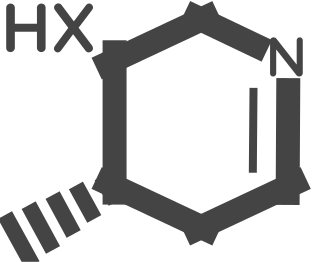 Structure

 P&D probe-likeness score

Structure formats
[[ format ]]
[[ compound[format === 'MOL' ? 'molblock' : format.toLowerCase()] ]]
Description
(extracted from source data)
DESCRIPTION
Potent, selective non-peptide PAR1 antagonist. Marketed as SCH-79797 dihydrochloride.
Other biological activity: SCH-79797 has been reported to exhibit antibacterial activity against Gram-positive and -negative bacteria, including MRSA and other clinically significant bacterial pathogens, with a low frequency of resistance in vivo . The authors show that SCH-79797 targets both bacterial folate metabolism and membrane integrity to mediate its antibacterial effect. (GtoPdb)
Other biological activity: SCH-79797 has been reported to exhibit antibacterial activity against Gram-positive and -negative bacteria, including MRSA and other clinically significant bacterial pathogens, with a low frequency of resistance in vivo . The authors show that SCH-79797 targets both bacterial folate metabolism and membrane integrity to mediate its antibacterial effect. (GtoPdb)
DESCRIPTION
SCH79797 is a highly potent, selective nonpeptide protease activated receptor 1 (PAR1) antagonist. SCH79797 inhibits binding of a high-affinity thrombin receptor-activating peptide to PAR1 with an IC50 of 70 nM and a Ki of 35 nM. SCH79797 inhibits thrombin-induced platelet aggregation with an IC50 of 3 ¦ÌM. SCH79797 has antiproliferative and pro-apoptotic effects, and limits myocardial ischemia/reperfusion injury in rat hearts. SCH79797 also potently prevents PAR1 activation in vascular smooth muscle cells, endothelial cells, and astrocytes[1][2][3][4].
DESCRIPTION
SCH79797 dihydrochloride is a highly potent, selective nonpeptide protease activated receptor 1 (PAR1) antagonist. SCH79797 dihydrochloride inhibits binding of a high-affinity thrombin receptor-activating peptide to PAR1 with an IC50 of 70 nM and a Ki of 35 nM. SCH79797 dihydrochloride inhibits thrombin-induced platelet aggregation with an IC50 of 3 ¦ÌM. SCH79797 dihydrochloride has antiproliferative and pro-apoptotic effects, and limits myocardial ischemia/reperfusion injury in rat hearts. SCH79797 dihydrochloride also potently prevents PAR1 activation in vascular smooth muscle cells, endothelial cells, and astrocytes[1][2][3][4].
PRICE
108
DESCRIPTION
antagonist of proteinase-activated receptor 1 (PAR1)
(Informer Set)
DESCRIPTION
Inhibits glutamate release. Anticonvulsant
(Tocris Bioactive Compound Library)
DESCRIPTION
SCH79797 dihydrochloride is an effective and selective antagonist of protease activated receptor 1 (PAR1) with an IC50 of 70 nM and a Ki of 35 nM. SCH79797 dihydrochloride has antiproliferative and pro-apoptotic effects.
(TargetMol Bioactive Compound Library)
[[ p.pathway_name ]]
[[ compound.targets[tid].gene_name ]]

Cell lines
0

Organisms
1

Compound Sets
12
Axon Medchem Screening Library
Cayman Chemical Bioactives
Concise Guide to Pharmacology 2021/22
Concise Guide to Pharmacology 2023/24
CZ-OPENSCREEN Bioactive Library
Guide to Pharmacology
Informer Set
Novartis Chemogenetic Library (NIBR MoA Box)
Selleckchem Bioactive Compound Library
TargetMol Bioactive Compound Library
Tocris Bioactive Compound Library
[[ a.name ]]
[[ ligand_id ]]
free of charge
External IDs
27

Molecular Weight
371.21
Hydrogen Bond Acceptors
5
Hydrogen Bond Donors
2
Rotatable Bonds
5
Ring Count
5
Aromatic Ring Count
4
cLogP
4.91
TPSA
68.76
Fraction CSP3
0.3
Chiral centers
0.0
Largest ring
6.0
QED
0.52

Structural alerts
0
No structural alerts detected

Related compounds
Custom attributes
(extracted from source data)
Target
F2R
PAR-1
Apoptosis
Protease-Activated Receptor (PAR)
Protease Activated Receptor (PAR)
PAR
Compound status
probe
Primary Target
Protease-Activated Receptors
MOA
Antagonist
F2R antagonist
PAR1 antagonist
Member status
member
Pathway
GPCR/G protein
Source data