
General
Preferred name
TIBOLONE
Synonyms
ORG-OD 14 ()
ORG OD 14 ()
Livial ()
tibolona ()
NSC-759898 ()
P&D ID
PD002840
CAS
5630-53-5
Tags
drug
available
First approval
1988
Drug indication
Osteoporosis
Anabolic metabolism
Drug Status
approved
investigational
Max Phase
3.0

Probe control
Probe control not defined

Orthogonal probes
0
No orthogonal probes found

Similar probes
0
No structurally similar probes found
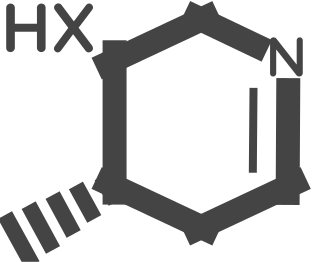 Structure

 P&D probe-likeness score

Structure formats
[[ format ]]
[[ compound[format === 'MOL' ? 'molblock' : format.toLowerCase()] ]]
Description
(extracted from source data)
ROE
Excreted in the urine and feces in the form of sulfated metabolites [L1720], [L1879].; ; The predominant route of elimination of tibolone is via the feces, although some excretion occurs via the urine [L1879].
METABOLISM
Tibolone is metabolized mainly in the liver [L1720]. ; ; The cytochrome P450 isoenzyme system is involved in minor hydroxylation of tibolone [L1879].; ; Tibolone is rapidly converted into three major metabolites: 3 alpha- and 3 beta-hydroxy-tibolone, which have oestrogenic effects, and the Delta(4)-isomer, which has both progestogenic and androgenic effects. The 3-hydroxy metabolites are present in the circulation, predominantly in their inactive sulfated form [A32150].
ABSORPTION
Tibolone is extensively and rapidly absorbed after oral administration [L1879]. The parent drug undergoes extensive metabolism, with. Greater than 80% of a radioactive dose excreted from the body as metabolites, which suggests very low plasma concentrations of tibolone. Plasma concentrations of the metabolites appear within 30 minutes and peak within 1â1.5 hours.2,7 The plasma concentrations of the hydroxymetabolites are higher than those of the â4-isomer. Food does not appear to have an effect on the absorption of this drug [L1879].; ;
PHARMACODYNAMICS
Tibolone prevents bone loss and treating post-menopausal symptoms without stimulating the endometrial tissues, which may lead to malignancy. Typical, drugs that treat post-menopausal symptoms such as estrogen, have a proliferative effect on the endometrium, increasing the risk of endometrial carcinoma [L1725]. The effects on the bone, brain and vaginal tissues can be explained by the estrogenic activity of tibolone. It is important to note that activity is not expressed in the endometrium. Tibolone behaves differently from estrogen plus progesterone combinations on the breast. Therefore, tibolone can be characterized as a selective estrogen activity regulator [A32150].; ; Tibolone has been demonstrated to be an effective agent in treating symptoms associated with menopause. A 16 week trial in 1189 women examined the effect of tibolone 2.5 mg once daily on climacteric symptoms. Women treated with tibolone showed improvement from baseline in typical menopausal symptoms including hot flashes, sweating, insomnia, and anxiety [L1879].
TOXICITY
>2000 mg/kg [MSDS]; ; The Million Women Study (MWS), which had a prospective observational design, studied the use of hormone replacement therapy. The results indicated that the increase in the incidence of breast cancer with estrogen and progestogen (compared to estrogen alone) was greater than the reduction in occurrence of endometrial cancer associated with adding progestogen to estrogen therapy. The MWS also reported a marked increase in the incidence of breast cancer with tibolone and with implanted and transdermal estrogen-only preparations [L1723].; ; Tibolone treatment in rodent studies showed an increased association with the development of a range of tumors in long-term oral carcinogenicity studies. These tumors included pituitary adenomas, mammary carcinomas and fibroadenomas, hepatic adenomas, uterine carcinoma, stromal polyps and stromal sarcoma, and carcinomas of the urinary bladder and testes. Tibolone failed to show any evidence of genotoxicity in studies for gene mutations, chromosomal damage as well as DNA damage [L1727].; ; Other adverse effects these include dizziness, headache, nausea, abdominal pain, rashes, pruritus, weight gain, edema, and migraine [L1728].
DESCRIPTION
Tibolone is a broad spectrum gonadal steroid agonist with progestagenic, androgenic, and estrogenic activities. Tibolone can be used for postmenopausal osteoporosis research[1][2].
PRICE
29
DESCRIPTION
Tibolone is an estrogen-like compound used for the treatment of the symptoms associated with menopausal transition (i.e., climacteric symptoms) and also for the treatment of osteoporosis.
DESCRIPTION
Tibolone is a synthetic anabolic steroid with estrogenic, androgenic and progestagenic activities.
(GtoPdb)
[[ p.pathway_name ]]
[[ compound.targets[tid].gene_name ]]

Compound Sets
15
Cayman Chemical Bioactives
ChEMBL Drugs
DrugBank
DrugBank Approved Drugs
DrugCentral
DrugCentral Approved Drugs
DrugMAP
DrugMAP Approved Drugs
Guide to Pharmacology
LSP-MoA library (Laboratory of Systems Pharmacology)
MedChem Express Bioactive Compound Library
NIH Clinical Collections (NCC)
NPC Screening Collection
Prestwick Chemical Library
ReFrame library
[[ a.name ]]
[[ ligand_id ]]
free of charge
External IDs
34

Molecular Weight
312.21
Hydrogen Bond Acceptors
2
Hydrogen Bond Donors
1
Rotatable Bonds
0
Ring Count
4
Aromatic Ring Count
0
cLogP
3.88
TPSA
37.3
Fraction CSP3
0.76
Chiral centers
6.0
Largest ring
6.0
QED
0.54

Structural alerts
0
No structural alerts detected

Related compounds
Custom attributes
(extracted from source data)
MOA
Estrogen/progestogen Receptor
Target
Androgen Receptor
Estrogen Receptor/ERR
Progesterone Receptor
Pathway
Vitamin D Related/Nuclear Receptor
Source data