
General
Preferred name
CEFACLOR
Synonyms
CEFACLOR HYDRATE ()
Loracarbef ()
CEFACLOR ANHYDROUS ()
Cefaclor (monohydrate) ()
Cefaclor monohydrate ()
Cefachlor, Cefaclorum ()
Compound 99638 ()
Keftid ()
Ceclor Cd ()
COMPOUND-99638 ()
Ceclor ()
J01DC04 ()
Distaclor MR ()
NSC-757422 ()
Bacticlor MR ()
Raniclor ()
Distaclor ()
Cefaclor ()
P&D ID
PD001586
CAS
70356-03-5
53994-73-3
121961-22-6
Tags
available
drug
Approved by
FDA
First approval
1979
Drug indication
Urinary tract infection
Bacterial infection
Drug Status
investigational
approved
Max Phase
4.0

Probe control
Probe control not defined

Orthogonal probes
0
No orthogonal probes found

Similar probes
0
No structurally similar probes found
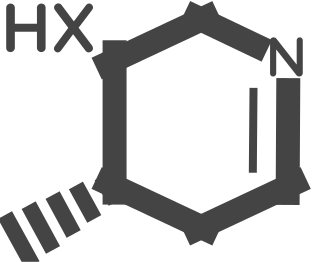 Structure

 P&D probe-likeness score

Structure formats
[[ format ]]
[[ compound[format === 'MOL' ? 'molblock' : format.toLowerCase()] ]]
Description
(extracted from source data)
PHARMACODYNAMICS
Cefaclor is a second generation cephalosporin antibiotic with a spectrum resembling first-generation cephalosporins. In vitro tests demonstrate that the bactericidal action of the cephalosporins results from inhibition of cell-wall synthesis. As indicated by _in vitro_ and _in vivo_ clinical studies, cefaclor was shown to be effective against most strains of Gram positive aerobes - Staphylococci (including coagulase-positive, coagulase-negative, and penicillinase-producing strains), Streptococcus pneumoniae, Streptococcus pyogenes (group A ß-hemolytic streptococci), as well as Gram-negative aerobes - Escherichia coli, Haemophilus influenzae (including ß-lactamase-producing ampicillin-resistant strains), Klebsiella sp, and Proteus mirabilis.
PRICE
29
DESCRIPTION
Cefaclor is a well-absorbed orally active cephalosporin antibiotic. Cefaclor can specifically bind to specific for penicillin-binding protein 3 (PBP3). Cefaclor can be used for the research of depression and kinds of infections caused by bacteria, such as respiratory tract infections, bacterial bronchitis, pharyngitis and skin infections[1][2][3][4].
DESCRIPTION
Cefaclor (Panoral) is a cephalosporin antibiotic.
PRICE
29
DESCRIPTION
Cefaclor is a well-absorbed orally active cephalosporin antibiotic. Cefaclor can specifically bind to specific for penicillin-binding protein 3 (PBP3). Cefaclor can be used for the research of depression and kinds of infections caused by bacteria, such as respiratory tract infections, bacterial bronchitis, pharyngitis and skin infections[1][2][3][4].
DESCRIPTION
Cefaclor monohydrate (Cefaclorum) is a beta-lactam, second-generation cephalosporin antibiotic with bactericidal activity.
(TargetMol Bioactive Compound Library)
[[ p.pathway_name ]]
[[ compound.targets[tid].gene_name ]]

Cell lines
0

Organisms
2

Compound Sets
21
AdooQ Bioactive Compound Library
Cayman Chemical Bioactives
ChEMBL Approved Drugs
ChEMBL Drugs
CZ-OPENSCREEN Bioactive Library
Drug Repurposing Hub
DrugBank
DrugBank Approved Drugs
DrugCentral
DrugCentral Approved Drugs
DrugMAP
DrugMAP Approved Drugs
NCATS Inxight Approved Drugs
NIH Clinical Collections (NCC)
NPC Screening Collection
Prestwick Chemical Library
ReFrame library
Selleckchem Bioactive Compound Library
TargetMol Bioactive Compound Library
The Spectrum Collection
[[ a.name ]]
[[ ligand_id ]]
free of charge
External IDs
82

Molecular Weight
367.04
Hydrogen Bond Acceptors
5
Hydrogen Bond Donors
3
Rotatable Bonds
4
Ring Count
3
Aromatic Ring Count
1
cLogP
0.62
TPSA
112.73
Fraction CSP3
0.27
Chiral centers
3.0
Largest ring
6.0
QED
0.67

Structural alerts
0
No structural alerts detected

Related compounds
Custom attributes
(extracted from source data)
Target
antibiotic
Bacterial
PBPs
5-HT Receptor
Penicillin-binding protein (PBP)
Disease Area
infectious disease, otolaryngology
Indication
pneumonia, skin infections, urinary tract infections, respiratory tract infections, tonsillitis, pharyngitis
MOA
bacterial cell wall synthesis inhibitor
Pathway
Microbiology/virology
Anti-infection
GPCR/G protein
Neuronal Signaling
Therapeutic Class
Antibiotics
Source data