
General
Preferred name
carnosine
Synonyms
Polaprezinc ()
Karnozin ()
beta-Alanyl-L-histidine ()
Promac ()
L-CARNOSINE ()
NSC-524045 ()
Zinc-l-carnosine ()
.beta.-alanyl-l-histidinato zinc ()
Zinc L-carnosine ()
Z 103 ()
Z-103 ()
Zinc carnosine ()
L-Carnosine-d4 ()
P&D ID
PD001527
CAS
305-84-0
107667-60-7
2714339-90-7
Tags
available
drug candidate
Drug indication
Peripheral arterial disease
Discovery agent
Drug Status
investigational
Max Phase
3.0
2.0

Probe control
Probe control not defined

Orthogonal probes
0
No orthogonal probes found

Similar probes
0
No structurally similar probes found
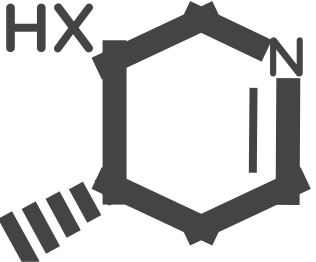 Structure

 P&D probe-likeness score

Structure formats
[[ format ]]
[[ compound[format === 'MOL' ? 'molblock' : format.toLowerCase()] ]]
Description
(extracted from source data)
PRICE
29
MOA
Polaprezinc increases the expression of various antioxidant enzymes, including superoxide dismutase 1 (SOD-1), SOD-2, heme oxygenase-1 (HO-1), glutathione S-transferase (GST), glutathione peroxidase (GSH-px), peroxidredoxin-1 (PRDX1; PRXI) and PRXD5 (PRXV). ; ; This process occurs in the gastric mucosa, defending mucosal cells against reactive oxygen species. This drug inhibits the activity of the transcription factor nuclear factor-kappaB (NF-kB) and decreases the expression of various inflammatory cytokines, including interleukin (IL) 1beta, IL-6, IL-8, and tumor necrosis factor alpha (TNF-a). ; ; Polaprezinc also promotes the expression of numerous growth factors, including as platelet-derived growth factor-B (PDGF-B), vascular endothelial growth factor (VEGF), and nerve growth factor (NGF), in addition to various heat shock proteins (HSPs), including HSP90, HSP70, HSP60, HSP47, HSP27, and HSP10. This process promotes tissue growth and protects against damage the gastric mucosa [L1308].
ROE
Intestinal absorption of the drug was examined using 14C- and 65Zn-labeled compounds. Polaprezinc metabolizes into its components, L-carnosine and zinc, during intestinal absorption. It was found that the excretion rates after one administration using 14C-labeled L-CAZ to rats were 4.1% in urine, 13.3% in feces, and 38.8% in exhalation. The study using 65Zn-labeled Paleprozinc were 0.3% in urine and 85.0% in the feces. The absorption rate of zinc is estimated to be approximately 11% [L1309].;
ABSORPTION
Intestinal absorption of L-CAZ was studied in rats by Sano et al. [L1309] using 14C- and 65Zn-labeled compounds. They suggested that L-CAZ dissociates to its components, L-carnosine and zinc, during intestinal absorption [L1309]. ;
DESCRIPTION
L-Carnosine (Karnozin) is is an antioxidant naturally found in skeletal muscle, brain tissue. It has the potential to suppress many of the biochemical changes that accompany aging.
(TargetMol Bioactive Compound Library)
DESCRIPTION
Polaprezinc is a chelate composed of zinc and L-carnosine, which exhibits gastroprotective, antioxidant, anti-ulcer and anti-inflammatory effects. It is approved in Japan for the treatment of gastric ulcers.
Nutritional supplement in health care products. (BOC Sciences Bioactive Compounds)
Nutritional supplement in health care products. (BOC Sciences Bioactive Compounds)
[[ p.pathway_name ]]
[[ compound.targets[tid].gene_name ]]
Compound Sets
19
BOC Sciences Bioactive Compounds
Cayman Chemical Bioactives
ChEMBL Drugs
Concise Guide to Pharmacology 2017/18
Concise Guide to Pharmacology 2019/20
Concise Guide to Pharmacology 2021/22
Concise Guide to Pharmacology 2023/24
Concise Guide to Pharmacology 2025/26
Drug Repurposing Hub
DrugMAP
Guide to Pharmacology
MedChem Express Bioactive Compound Library
Natural product-based probes and drugs
NPC Screening Collection
ReFrame library
Selleckchem Bioactive Compound Library
TargetMol Bioactive Compound Library
The Spectrum Collection
[[ a.name ]]
[[ ligand_id ]]
free of charge
External IDs
99

Molecular Weight
226.11
Hydrogen Bond Acceptors
4
Hydrogen Bond Donors
4
Rotatable Bonds
6
Ring Count
1
Aromatic Ring Count
1
cLogP
-1.13
TPSA
121.1
Fraction CSP3
0.44
Chiral centers
1.0
Largest ring
5.0
QED
0.49

Structural alerts
0
No structural alerts detected

Related compounds
Custom attributes
(extracted from source data)
Target
antioxidant
Endogenous Metabolite
Pathway
Immunology/Inflammation
Metabolic Enzyme/Protease
Metabolism
oxidation-reduction
MOA
Antioxidant
antiglycating agent
Biosynthetic Origin
Other (Amino Acid)
Therapeutic Indication
Antiulcer
Source data