
General
Preferred name
SILIBININ
Synonyms
Silibinin A ()
Silybin ()
Silymarin I ()
Silibinin (Silybin) ()
SILYBIN A ()
(±)-Silybin ()
Silibinin (mixture of Silybin A and Silybin B) ()
Silybin, Silibinin A, Silymarin I, Flavobin ()
Silibinin (NSC 651520) ()
NSC-651520 ()
(¡À)-Silybin ()
P&D ID
PD000541
CAS
22888-70-6
36804-17-8
Tags
available
drug candidate
natural product
nuisance
Drug Status
experimental
investigational
Max Phase
3.0
Drug indication
Hepatocellular carcinoma

Probe control
Probe control not defined

Orthogonal probes
0
No orthogonal probes found

Similar probes
0
No structurally similar probes found
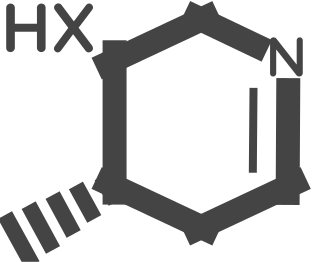 Structure

 P&D probe-likeness score

Structure formats
[[ format ]]
[[ compound[format === 'MOL' ? 'molblock' : format.toLowerCase()] ]]
Description
(extracted from source data)
DESCRIPTION
Silibinin is a naturally occurring plant metabolite that is found in the milk thistle Silybum marianum. It has poor oral bioavailability. An analogue that has been chemically altered to maximise oral bioavailability and biological activity in models of metabolic dysfunction-associated steatohepatitis (MASH) has been reported .
(GtoPdb)
DESCRIPTION
Silybin A (Silibinin A), an effective anti-cancer and chemopreventive agent, has been shown to exert multiple effects on cancer cells, including inhibition of both cell proliferation and migration.
DESCRIPTION
(¡À)-Silybin is the racemate of Silybin (HY-N0779A). Silybin induces apoptosis and exhibits hepatoprotective, antioxidant, anti-inflammatory, anti-cancer activity[1][2].
PRICE
29
DESCRIPTION
Silibinin (Silybin) is the major active constituent of silymarin, a standardized extract of the milk thistle seeds, containing a mixture of flavonolignans consisting of silibinin, isosilibinin, silicristin, silidianin and others. Silibinin itself is a mixture of two diastereomers, silybin A and silybin B, in approximately equimolar ratio. Both in vitro and animal research suggest that silibinin has hepatoprotective (antihepatotoxic) properties that protect liver cells against toxins. Silibinin has also demonstrated in vitro anti-cancer effects against human prostate adenocarcinoma cells, estrogen-dependent and -independent human breast carcinoma cells, human ectocervical carcinoma cells, human colon cancer cells, and both small and nonsmall human lung carcinoma cells.
(TargetMol Bioactive Compound Library)
[[ p.pathway_name ]]
[[ compound.targets[tid].gene_name ]]

Cell lines
3

Organisms
2
Compound Sets
15
AdooQ Bioactive Compound Library
Cayman Chemical Bioactives
ChEMBL Drugs
Concise Guide to Pharmacology 2023/24
Drug Repurposing Hub
DrugBank
Guide to Pharmacology
NPC Screening Collection
Nuisance compounds in cellular assays
ReFrame library
Selleckchem Bioactive Compound Library
TargetMol Bioactive Compound Library
The Spectrum Collection
ZINC Tool Compounds
[[ a.name ]]
[[ ligand_id ]]
free of charge
External IDs
36

Molecular Weight
482.12
Hydrogen Bond Acceptors
10
Hydrogen Bond Donors
5
Rotatable Bonds
4
Ring Count
5
Aromatic Ring Count
3
cLogP
2.36
TPSA
155.14
Fraction CSP3
0.24
Chiral centers
4.0
Largest ring
6.0
QED
0.37

Structural alerts
4
aggregator (Aggregator Advisor)
Aggregators
aggregator (ZINC)
Aggregators
Aggregator (Nuisance compounds)
Aggregators
Aggregation
Nuisance compounds

Related compounds
Custom attributes
(extracted from source data)
Pathway
NF-¦ÊB
Autophagy
Immunology/Inflammation
Metabolism
NF-κB
Metabolic Enzyme/Protease
Indication
hepatic cirrhosis
Target
ALOX5
Reactive Oxygen Species (ROS)
Apoptosis
Reactive Oxygen Species
MOA
Cytochrome P450 inhibitor
Source data