
General
Preferred name
PIDOLIC ACID
Synonyms
L-pyroglutamate ()
5-Oxoproline ()
pidolic-acid ()
L-PYROGLUTAMIC ACID (pidolic-acid) ()
PYROGLUTAMIC ACID ()
L-Pyroglutamic acid ()
L-pyroglutamate, 5-Oxoproline, pidolic acid ()
MAGNESIUM PIDOLATE ()
Acido pidolico ()
Pyroglutamate ()
NSC-143034 ()
Pidolidone ()
Pyroglutamic acid, l- ()
L-pyrrolidone carboxylic acid ()
5-l-oxoproline ()
Glutimic acid ()
L-pca ()
Pyroglu ()
Ajidew a-100 ()
Acide pidolique ()
NSC-760414 ()
Pidolic Acid ()
Pidolic acid magnesium salt (2:1) ()
Magnesium pca ()
Magnesium pyroglutamate ()
P&D ID
PD000152
CAS
98-79-3
135701-98-3
16891-48-8
Tags
available
drug
drug candidate
Drug indication
Discovery agent
Hemoglobin SC Disease
Drug Status
approved
investigational
Max Phase
2.0

Probe control
Probe control not defined

Orthogonal probes
0
No orthogonal probes found

Similar probes
0
No structurally similar probes found
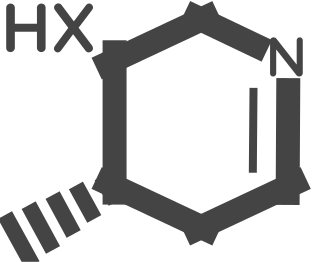 Structure

 P&D probe-likeness score

Structure formats
[[ format ]]
[[ compound[format === 'MOL' ? 'molblock' : format.toLowerCase()] ]]
Description
(extracted from source data)
MOA
Pidolic acid is an endogenous amino acid derivative where the free amino group of glutamic acid or glutamine cyclizes to generate a lactam [A32991, L2729]. Subsequently it is also a metabolite in the glutathione cycle that is converted to glutamate by the enzyme 5-oxoprolinase [A32991, L2729]. Moreover, N-terminal glutamic acid and glutamine residues can either spontaneously cyclize to become pidolic acid, or be enzymatically transformed by glutaminyl cyclases [A32991, L2729]. In particular, this is ultimately a form of N-termini that is a challenge for N-terminal sequencing using Edman chemistry, which necessitates a free primary amino group that is not present in pidolic acid [A32991, L2729]. Pyroglutamate aminopeptidase can restore a free N-terminus by cleaving off the pyroglutamate residue, however [A32991, L2729].; ; Additionally, pidolic acid and certain pidolic acid salts like calcium, magnesium, and potassium pidolic acid are sometimes used as skin or hair conditioning agents because of their humectant effects [F53]. In such humectant formulations, hydrophilic amine, hydroxyl, or even carboxyl groups possess high affinities for forming hydrogen bonds with molecules of water, allowing the hygroscopic formulations to attract and retain moisture in the air nearby through absorption, therefore drawing the water vapor into the formulation.
INDICATION
There is currently no clinically approved and/or marketed medicine that relies upon pidolic acid as an active ingredient for any formal therapeutic indication.; ; Although pidolic acid may be sold in a variety of non-prescription, over-the-counter dietary supplement products for cognitive or memory enhancement, there are many studies that suggest that such products or such supplementation do not elicit any kind of cognitive benefit to users [A32981, A32982]. In fact, the general suggestion for any such pidolic acid product is to exercise caution in their recommendation as much more research is necessary [A32981].; ; Pidolic acid and sodium pidolic acid are, however, used to some extent in skin and hair conditioning agents owing to their humectant characteristics [F53].
PHARMACODYNAMICS
Pidolic acid is a naturally occurring but little-studied amino acid derivative that can be formed enzymatically or non-enzymatically and participates as a biological intermediate in various chemical pathways [A32991, L2729]. Elevations of the acid in blood levels may be associated with problems of glutamine or glutathione metabolism [L2729]. Pidolic acid, in general, is found in large quantities in brain tissue and other tissues in bound form, like skin [L2729].; ; Moreover, pidolic acid in high enough levels can act as an acidogen capable of inducing acidosis and a metabotoxin that can result in adverse health effects [L2729]. Chronically elevated levels of pidolic acid are associated with at least five inborn errors of metabolism including 5-oxoprolinuria (where 5-oxoproline is otherwise known as pidolic acid), 5-oxoprolinase deficiency, glutathione synthetase deficiency, hawkinsinuria, and propionic acidemia [L2729]. In particular, abnormally high levels of organic acids like pidolic acid in the blood, urine, brain, and/or other tissues results in general metabolic acidosis [L2729]. Such acidosis generally occurs when arterial pH falls below 7.35 [L2729]. In infants, the initial symptoms of acidosis consist of poor feeding, vomiting, loss of appetite, weak muscle tone (hypotonia), and lack of energy [L2729]. Eventually, acidosis and the symptoms of acidosis can lead to heart, liver, and kidney abnormalities, seizures, coma, and possibly even death [L2729]. Many children who are afflicted with organic acidemias experience intellectual disability or delayed development. In adults, acidosis or acidemia is characterized by headaches, confusion, feeling tired, tremors, sleepiness, and seizures [L2729]. ; ; High levels of pidolic acid in the blood have also been demonstrated following acetaminophen overdose, causing an increased level of acidity called a high anion gap metabolic acidosis [A32993].
DESCRIPTION
L-Pyroglutamic acid is the levo-isomer of Pyroglutamic acid. L-Pyroglutamic acid is the biologically active enantiomer in humans. Pyroglutamic acid is an intermediate in glutathione metabolism. L-Pyroglutamic acid can be used as a biomarker for systemic lupus erythematosus (SLE)[1].
PRICE
29
DESCRIPTION
L-Pyroglutamic acid is an urease inhibitor.
(Enamine Bioactive Compounds)
DESCRIPTION
L-Pyroglutamic acid (pidolic acid), a cyclized derivative of the L-GLUTAMIC ACID, can elevate blood levels. This function may be associated with problems of GLUTATHIONE or GLUTAMINE metabolism.
(TargetMol Bioactive Compound Library)
[[ p.pathway_name ]]
[[ compound.targets[tid].gene_name ]]

Compound Sets
15
Cayman Chemical Bioactives
ChEMBL Drugs
Drug Repurposing Hub
DrugBank
DrugBank Approved Drugs
DrugMAP
Enamine Bioactive Compounds
Enamine BioReference Compounds
JUMP-Target 1 Compound Set
MedChem Express Bioactive Compound Library
NPC Screening Collection
ReFrame library
Selleckchem Bioactive Compound Library
TargetMol Bioactive Compound Library
The Spectrum Collection
[[ a.name ]]
[[ ligand_id ]]
free of charge
External IDs
61

Molecular Weight
129.04
Hydrogen Bond Acceptors
2
Hydrogen Bond Donors
2
Rotatable Bonds
1
Ring Count
1
Aromatic Ring Count
0
cLogP
-0.65
TPSA
66.4
Fraction CSP3
0.6
Chiral centers
1.0
Largest ring
5.0
QED
0.49

Structural alerts
0
No structural alerts detected

Related compounds
Custom attributes
(extracted from source data)
Target
Endogenous Metabolite
Unusual Amino Acids
ADAM28, AMY1A, AMY2A, AMY2B, ANG, CCL8, HCRT, IGLC1, KRTAP5-2, TFF2, VEGFA
VEGFA
Indication
xerosis cutis
Pathway
Metabolism
Metabolic Enzyme/Protease
Source data